L157 #16: The Session Winds Down
Editorial: The Week in Parliament
The week the chamber settled its accounts before falling quiet
"Þjóðin fær boltann núna, þjóðin veit sínu viti" — "The nation gets the ball now; the nation knows its own mind" — said Prime Minister Kristrún Frostadóttir during Monday's question time, defending her refusal to recall parliament in August to debate the coming referendum on European Union membership. It was the kind of line a leader delivers when the session is winding down and the arguments have run their course. By the end of Tuesday, 16 June, the chamber had stopped voting altogether.
This was a short, partial week. Sixty-eight votes were held — up sharply from the previous week's forty, and well above the four-week median — but 329 speeches represented a fall of nearly fifty-seven per cent, and the rolling median sits at 645. No bills advanced to a new stage. One new bill was introduced: a measure on public support for innovation since 2021. Committees did not meet. Public submissions numbered zero. The week's business was concentrated into Monday and Tuesday, and then the parliamentary year effectively closed.
What filled those two days was largely housekeeping. Most of the sixty-eight votes were routine confirmations passed without dissent: amendments to the general penal code (almenn hegningarlög), social assistance (félagsleg aðstoð), the implementation of court-ordered security measures, all carried with comfortable majorities and no votes against. A resolution commemorating the 1,100th anniversary of Alþingi (1100 ára afmælis Alþingis minnst) passed 56 to nil. These are the votes a parliament takes when it is tidying its desk.
The contested business clustered around three issues. The bill on foreign nationals and their employment rights (útlendingar og atvinnuréttindi útlendinga) drew the most attention, with twenty-two recorded votes, four of them genuinely close — minority amendments that failed, mostly by margins around 6 to 30. The protection-and-energy plan (verndar- og orkunýtingaráætlun) saw one defeated amendment before the substantive resolution carried. And the energy-distribution cost-equalisation measure (jöfnun kostnaðar við dreifingu á raforku) passed cleanly, 56 to nil, five times over. Where there was disagreement, it was procedural and contained; the coalition's numbers held.
The week's most visible exchange came not in a vote but in question time. Justice Minister Þorbjörg Sigríður Gunnlaugsdóttir, pressed by Snorri Másson of Miðflokkurinn (the Centre Party) on the alleged misuse of student residence permits, answered by listing the government's enacted immigration measures one after another — the abolished eighteen-month rule, the deportation-facility law, the stronger Dublin regulation. Snorri's complaint was narrower: he argued, reading from the bill, that its actual effect ran opposite to the stated aim of tighter control. The two were not quite arguing about the same thing, which is often how the final week of a session sounds.
The absence figures deserve a note. Sjálfstæðisflokkurinn (the Independence Party) recorded 267 absences, a rate of 32.9 per cent — the highest of any party, well above Miðflokkurinn's 25.0 per cent and Viðreisn's 19.3 per cent. Framsóknarflokkur (the Progressive Party) sat at the other end, with just five absences and a rate of 1.7 per cent. In a week this thin, attendance numbers are easily distorted by which votes a party chose to skip; the Independence Party's abstentions on the public-housing and senior-official-pay measures account for a good share of its total. Still, the gap is wide enough to be worth recording rather than explaining away.
On the fiscal plan for 2027–2031 (fjármálaáætlun), the coalition pushed its medium-term framework through on a 31-to-20 split, with the opposition united against. Kristrún has framed the plan as the route to the first balanced budget in roughly a decade; the opposition, in the persons of Guðrún Hafsteinsdóttir and Stefán Vagn Stefánsson, argued that the underlying forecasts had weakened since the plan was tabled. That disagreement was not resolved this week. It was simply adjourned.
A short week is not necessarily an idle one, and this was not an idle week so much as a concluding one. The chamber cleared its routine backlog, registered its remaining disagreements on immigration, energy and the budget, and then stopped. What stands out is less any single decision than the rhythm of an ending: the votes that passed unanimously because the arguing was over, and the few that did not because some arguments never quite finish. By Tuesday afternoon, the parliamentary year had handed the larger questions — the budget, Europe — to the autumn and to the electorate. On the available record, that is a fair description of the week: not a turning point, but a tidy close.
Week at a Glance
|
68
▲ from 40
Votes |
329
▼ from 761
Speeches |
0
Committee Meetings |
14
▲ from 5
Issues Voted |
Legislative focus: Local Government (4), Social Affairs (4), Law Enforcement & Oversight (3), Personal Rights (3), Health (2)
Party Voting Patterns
Absence Rate
votes with tallies
Individual Votes
Most Words Spoken
Parliamentary Awards
Session 157 • Recognising the quirks and patterns of Althingi
The Awards Column
The striking thing about this week's named awards is that both came from the same hour of question time, both pointed at the same minister-led arguments, and both worked by turning a speaker's own words against the exchange. One was a defence that read like an inventory; the other was a question built almost entirely from a phrase the Prime Minister had used herself. In a week with no advancing bills and little to decide, the sharpest moments were not about new business at all — they were about holding the record straight before the session closed.
The Broken Record list tells the complementary story. Four MPs earned the placement, and each did so by returning to a single phrase the week kept demanding of them — a certainty marker, an about-turn, a parish, a wage threshold. When the arguing has narrowed to a handful of contested points, the chamber's vocabulary narrows with it, and repetition becomes the clearest map of who was standing where.
Mic Drop of the Week
The single best speech of the week — as judged by our parliamentary critic.
Þorbjörg Sigríður Gunnlaugsdóttir (Viðreisn), the Justice Minister, took the Mic Drop for a 368-word answer in the unprepared question time on immigration (óundirbúinn fyrirspurnatími — útlendingamál), and the craft was in the structure of the reply. Pressed on alleged misuse of student permits, she did not defend the specific charge so much as reframe the entire exchange around the distance between talking about a problem and acting on it.
The construction was an inventory. Rather than answer the narrow question first, Þorbjörg reeled off a sequence of enacted measures — the abolished eighteen-month rule, the law on revoking protection, stronger Schengen oversight, the passenger-list obligation, the deportation-facility law, the strengthened Dublin regulation, the deportation of foreign convicts, raised residence-permit fees — each introduced with the same drumbeat phrase, þetta höfum við gert ("this we have done"). The rhetorical effect of the repetition was cumulative: by the time she reached the deportation-facility law, she could note in passing that the questioner's own bloc had opposed it. She then closed not on the policy but on the principle underneath it.
The line she chose:
Það sem okkur greinir kannski á um er að mér finnst það nákvæmlega ekkert vandamál að fólk komi hingað til lands til að fara í nám. ("Where we perhaps differ is that I see absolutely no problem with people coming to this country to study.")
It was a closer engineered to convert a hostile question into a statement of position — the move of a minister who had decided the surest defence was to recast the argument as a contrast between her record and her questioner's framing.
“Það sem okkur greinir kannski á um er að mér finnst það nákvæmlega ekkert vandamál að fólk komi hingað til lands til að fara í nám.”
Where we perhaps differ is that I see absolutely no problem with people coming to this country to study.
Þorbjörg Sigríður Gunnlaugsdóttir (V), Justice Minister — 368 words on Óundirbúinn fyrirspurnatími — útlendingamál (2026-06-15).
Pressed on student-permit abuse, the Justice Minister answered not with a defence but with a manifesto, reeling off ten enacted measures — from the abolished 18-month rule to the deportation-facility law the questioner's own party opposed — and reframing the exchange around the gap between talking and doing. It turned a hostile question into a record of policy receipts.
Sharpest Question
The most incisive question or challenge posed in debate this week.
Stefán Vagn Stefánsson (Framsóknarflokkur) earned the Sharpest Question for a 164-word follow-up in the unprepared question time on wage settlements and public finances (óundirbúinn fyrirspurnatími — kjarasamningar og ríkisfjármál), and its force came from quotation. Stefán built the question almost entirely from the Prime Minister's own earlier words.
The construction drew out two tensions in sequence. First, he noted that the Prime Minister had said the state would not involve itself in private-sector wage talks, yet a tripartite group with the state, ASÍ and SA now existed — and that even adjusting fee schedules, as she had floated, costs money. Then he reached for a phrase she had used in an earlier exchange and turned it into the whole of his question.
Það verða hallalaus fjárlög hvað sem það kostar. Hvað er hæstv. forsætisráðherra að meina með því, hvað sem það kostar? Sjáum við fram á skattahækkanir í haust? ("There will be a balanced budget whatever it costs. What does the Prime Minister mean by that — whatever it costs? Are we looking at tax rises this autumn?")
The technique was to take a confident pledge and ask it to specify its own terms. By holding up "hvað sem það kostar" ("whatever it costs") and asking what, concretely, it cost, Stefán built a question that could not be answered without naming either a reversal or a price — leaving the choice to the person who had supplied the phrase.
“Það verða hallalaus fjárlög hvað sem það kostar. Hvað er hæstv. forsætisráðherra að meina með því, hvað sem það kostar? Sjáum við fram á skattahækkanir í haust?”
There will be a balanced budget whatever it costs. What does the Prime Minister mean by that — whatever it costs? Are we looking at tax rises this autumn?
Stefán Vagn Stefánsson (Fr) — on Óundirbúinn fyrirspurnatími — kjarasamningar og ríkisfjármál (2026-06-15).
He drew out two contradictions in one minute: the Prime Minister had said the state would not touch wage talks, yet a tripartite group now exists; and her 'whatever it costs' pledge for a balanced budget invited the obvious follow-up. By quoting her own earlier words back, he turned a vague worry into a question she could not answer without conceding either the reversal or the tax rises.
Broken Record Award
MPs who repeat themselves most — same catchphrases, recycled arguments, and recurring anecdotes across different speeches.
Four MPs earned the Broken Record this week, each for circling a single fixed point.
Kristrún Frostadóttir (Samfylkingin), this week's spotlight, earns it for governing by certainty: anchoring answer after answer in það liggur alveg fyrir settles each topic on her terms, closing the question before the opposition can reopen it.
Diljá Mist Einarsdóttir (Sjálfstæðisflokkur) earns it for a critique that never tests itself: every line on foreign policy collapses into the same verdict — Brussels has displaced Washington — so the charge repeats rather than examines the government's account.
Bergþór Ólason (Miðflokkurinn) earns it for an image built for travel: folding a Breiðafjörður ferry dispute into a parable about EU membership, the "Brussel-hreppur" coinage returning so the local grievance always points at the same destination.
Snorri Másson (Miðflokkurinn) earns it for the technician's fixation: having worked the immigration bill line by line, he keeps returning to his single Swedish-model amendment, treating the 90-percent median-wage threshold as the technical key the minister must address.
| Name | Speeches | Top Catchphrase | Uses |
|---|---|---|---|
| Kristrún Frostadóttir (Sf) | 8 | “það liggur alveg fyrir” | 5× |
| Diljá Mist Einarsdóttir (Sj) | 2 | “viðsnúningur / U-beygja gagnvart Bandaríkjunum” | 3× |
| Bergþór Ólason (M) | 2 | “líkindi við Evrópusambandið” | 2× |
| Snorri Másson (M) | 2 | “90% af miðgildislaunum” | 2× |
1. Kristrún Frostadóttir, Prime Minister (Samfylkingin)
Anchoring every answer in 'það liggur alveg fyrir' converts a defensive question-time into a discipline of certainty, closing each topic before the opposition can reopen it.
- “það liggur alveg fyrir” (5×) — Certainty marker deployed across unrelated topics — the fiscal plan's procedure, wage talks, US relations — to settle each exchange on her terms.
- “við fylgjum samþykktu verklagi” (2×) — Procedure-as-answer: the fiscal-plan timing is defended by invoking the agreed process rather than the contested assumptions.
2. Diljá Mist Einarsdóttir (Sjálfstæðisflokkur)
Every line on foreign policy collapses into one diagnosis — Brussels has displaced Washington — so the critique repeats a single frame rather than testing it against the government's account.
- “viðsnúningur / U-beygja gagnvart Bandaríkjunum” (3×) — The 'about-turn' / 'U-turn' verdict on US relations restated across both turns as the fixed lens for every detail, from minister travel to the Iran declaration.
- “með annan fótinn í Brussel” (2×) — Brussels-fixation image reused to bind the EU question and the US question into one charge of misplaced priorities.
3. Bergþór Ólason (Miðflokkurinn)
Folding a Breiðafjörður ferry dispute into a parable about EU membership is built for effect, the 'Brussel-hreppur' image returning so the local grievance always points at the same destination.
- “líkindi við Evrópusambandið” (2×) — The Flatey ferry neglect is twice cast as a preview of what EU membership would bring, the analogy doing the persuasive work in both interventions.
- “Brussel-hreppi” (1×) — The 'Brussels parish' coinage frames the EU as a place where small nations' interests are ranked last — a quotable image carrying the same argument.
Data sourced from Althingi Open Data (althingi.is). Generated 2026-06-21.
MP Spotlight
A deep dive into one parliamentarian each week
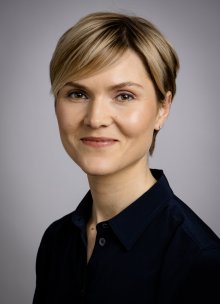
Kristrún Frostadóttir
Prime Minister, Samfylkingin
Born 1988-05-12
Stúdentspróf MR 2008. BS-próf í hagfræði HÍ 2011. MA-próf í hagfræði frá Boston-háskóla 2014. MA-próf í alþjóðafræði með áherslu á hagstjórn og alþjóðafjármál frá Yale-háskóla 2016.
|
214 speeches this session |
60,974 words total |
284 words avg per speech |
Speeches: Speech count (percentile). Attendance: Vote participation rate. Loyalty: Votes aligned with party majority. Breadth: Issue diversity (percentile). Experience: Sessions served (percentile).
Kristrún Frostadóttir: the economist who answers in certainties
By Monday morning of this short week, Kristrún Frostadóttir had taken the floor nine times for 2,243 words — more speech and more words than any other member, and roughly twice the output of the next-busiest speaker. For a Prime Minister in the closing days of a session, this is not unusual: question time is the format in which the head of government is most exposed, and the opposition spends the final week trying to extract concessions before the chamber empties. What is worth examining is not that Kristrún spoke the most, but how she spoke — and what her full record this session reveals about the way she handles a parliamentary exchange.
The numbers frame the person. Across session 157, Kristrún has delivered 214 speeches totalling 60,974 words across 93 distinct issues — her busiest sitting in six sessions on the available record, ahead even of her pre-government years on the Budget Committee (fjárlaganefnd). Her voting loyalty to Samfylkingin (the Social Democratic Alliance) stands at 95.9 per cent; of 1,053 recorded votes, her thirty-eight departures from the party line are all notified absences (boðaði fjarvist) rather than dissenting votes, clustered on a single day in March across shipping law, energy-permit simplification and visa measures. She is, on this record, an exceptionally disciplined voter and an unusually prolific speaker. Both traits suit the office she holds.
Two arenas: the dispatch box and the bill
Kristrún's speech this session falls into two distinct registers, and the contrast is instructive.
In question time — where most of this week's nine interventions landed — she is a manager of exchanges. Pressed on the ferry Baldur's reassignment to the Westman Islands, on relations with the United States, on wage-settlement provisions, and on whether parliament should sit in August, she answered each in turn with a brisk command of detail and a consistent refusal to be drawn beyond her prepared position. On the Baldur dispute, she dismissed the attempt to link a Breiðafjörður ferry problem to EU negotiations as "helst til langsótt" — rather far-fetched — while conceding the situation was genuinely difficult. On US relations, she argued that administrative contact with Washington "hefur aldrei verið betra" (has never been better), distinguishing it from the political channel. Each answer was built to close the topic rather than open it.
In the second register — moving her own legislation — Kristrún is a different speaker. Her speeches introducing the bill on the President's salary and the Government Offices (laun forseta Íslands og Stjórnarráð Íslands) and the amendment to administrative law (stjórnsýslulög) run long, technical and patient, walking the chamber through the mechanics of forsetaritari appointments or the question of whether independent administrative committees may seek advisory opinions from the EFTA Court. Here she explains rather than parries. The economist's training shows: she is comfortable in detail, and visibly more at ease building an argument than deflecting one.
The bridge between the two arenas is fiscal policy, which dominates her record. Her top topics this session are fiscal policy, inflation, the Central Bank, interest rates and the budget. Her central claim — restated across the fjármálaáætlun debate and economic-policy discussions — is that the government is "að laga ríkisfjármálin" (fixing the public finances), heading toward what she describes as the first balanced budget in nearly a decade. Whether that outcome materialises is, by her own admission, contingent on forecasts that may shift; she said as much this week, noting that final assumptions would not be known "fyrr en á næstu vikum" (until the coming weeks). The argument is hers to make and the opposition's to contest. What is observable from the record is the consistency with which she returns to it.
Rhetorical DNA
Kristrún's signature is the certainty marker. Her most frequent phrase this session, by a wide margin, is "það liggur alveg fyrir að" — "it is entirely clear that" — which appears thirty-six times across her speeches, and five times in this week's eight tracked interventions alone. It is the verbal device of someone settling a question rather than exploring it: the phrase asserts that a matter is closed before the opposition can reopen it. The week's broken-record analysis flagged exactly this pattern, with the verdict that anchoring each answer in það liggur alveg fyrir converts a defensive question-time into a discipline of certainty.
That diagnosis cuts both ways. A leader who repeats a certainty marker thirty-six times is either exercising deliberate message discipline or leaning on a verbal crutch, and the honest reading is that it functions as both: it is a habit that happens to be useful to the role. The same applies to her second recurring move this week — defending the fiscal plan's timing by invoking the agreed process (við fylgjum samþykktu verklagi) rather than relitigating the contested assumptions. Procedure-as-answer is a recognisable governing tactic, and it is no more or less legitimate than the opposition's habit of restating a single framing until it sticks.
Her other characteristic phrases reveal the economist beneath the politician. "Það breytir því ekki að" ("that doesn't change the fact that") appears nineteen times — a concession-then-pivot structure that grants a point before reasserting the main line. "Í lok dags" ("at the end of the day") shows up sixteen times, a summarising tic. And the workhorse connector "vegna þess að" ("because") appears eighty-nine times, more than seven times in ten of her speeches containing it — a marker of someone who reflexively supplies reasons, which is either a virtue or a verbal habit depending on the listener.
Catchphrases
| Phrase | Translation | Count |
|---|---|---|
| það liggur alveg fyrir að | it is entirely clear that | 36 |
| það breytir því ekki að | that doesn't change the fact that | 19 |
| í lok dags | at the end of the day | 16 |
| hringinn í kringum landið | around the country | 14 |
| ástæðan fyrir því að við erum | the reason we are | 10 |
Emotional register
For a politician who speaks this often, Kristrún is notably even in temperature. Her question-time answers rarely rise to indignation, and they almost never reach for the personal; the dominant note is composed insistence, the tone of someone reporting a settled state of affairs rather than fighting for one. Where she does warm, it is in defence of policy she plainly believes in — most visibly in her April speech on a statutory right to preschool places (lögfesting réttar til leikskólapláss), where she stepped explicitly out of the Prime Minister's role and into the party leader's. "Ég er forsætisráðherra en ég er líka formaður Samfylkingarinnar" — "I am Prime Minister, but I am also chair of Samfylkingin" — she said, before pressing the case that the state should help fund preschools as it does primary schools, on the Nordic model. It was the rare moment when the official register gave way to the conviction underneath it.
The other consistent register is the economist's appeal to the longer view. Repeatedly she asks the chamber to look past the month-to-month — "stóra myndin", the big picture — and to leave short-term shocks to the Central Bank rather than reversing the entire fiscal stance. It is a temperamentally cautious argument delivered with confidence, and it is the through-line of her parliamentary voice: steadiness offered as a virtue, certainty offered as reassurance.
The verdict
Kristrún Frostadóttir is, on the evidence of this session, a Prime Minister who governs the way an economist would — by anchoring positions, supplying reasons, and declining to be moved off a forecast she has decided to defend. Her record this week is consistent with her record across the session: she speaks more than anyone, votes almost perfectly with her party, and closes exchanges rather than extending them. The certainty in her phrasing is the clearest tell. Whether one reads "það liggur alveg fyrir" as the discipline of a leader who has done the work or the reflex of someone who would rather settle a question than reopen it, the phrase does the same job either way: it converts a defensive format into a controlled one. In the final, quiet week of a parliamentary year, that control was on full display — and it will be tested again in the autumn, when the budget she has staked her economic argument on returns to the chamber for its verdict.
Key Legislation & Votes
Stage key: 1st reading • In committee • 2nd reading • 3rd reading • Enacted
Get Þingfréttir by email
Weekly parliamentary digest — straight to your inbox every Sunday.
Subscribe