L157 #15: Few Votes, Weighty Debate
Editorial: The Week in Parliament
The week parliament passed the law without moving a bill
On Tuesday afternoon, the chamber filled for the deportation-facility bill. The brottfararstöð (deportation facility) bill — legislation that had, by several MPs' own accounts, been carried through the chamber across many sessions and "under heavy criticism" — cleared its final reading with 42 votes in favour, none against and 10 abstentions, then again, and again, clause by clause. It was the closest the week came to drama, and it was over almost before it began.
That tells you most of what you need to know about the week of 8 June. Forty votes were recorded, well above the four-week median of 21, but the number flatters the substance. Many of those votes were procedural repeats on the same handful of issues — the innviðafélag (infrastructure company) bill alone accounted for fifteen recorded votes, the útlendingar og lögreglulög (foreigners and police law) measure for fourteen. Strip out the repetition and what remains is a parliament processing a small set of items with method rather than passion. Speeches came to 761, down a third from the previous week's 1,113 but still slightly above the rolling median. One bill was introduced: a measure on the implementation of the freedom-of-information act. The committees did not meet at all.
The real argument of the week was not about a bill at all. It was about a plan. The fjármálaáætlun fyrir árin 2027–2031 (fiscal plan for 2027–2031) drew 27 speeches, more than any single topic, and the dispute was strikingly procedural: not what the plan said, but whether parliament should be debating it now. Several opposition members argued the plan's assumptions had collapsed. Karl Gauti Hjaltason (Miðflokkurinn) told the chamber the economic outlook in the new forecast had worsened, that next year's budget would not be balanced, and pressed his recurring question — hvaða skatta ætlar þessi ríkisstjórn að hækka ("which taxes does this government intend to raise") — to force the majority to name its revenue measures. Guðlaugur Þór Þórðarson (Sjálfstæðisflokkur) returned, as he has across several issues, to two words: forsendur eru brostnar ("the assumptions have collapsed").
The defence fell largely to one man. Sigurjón Þórðarson (Flokkur fólksins), chair of the budget committee, presented the majority's report and held the government line under fire, citing — repeatedly — page 35 of the plan, where it states that the figures are not updated each time a new forecast arrives. Whether that is reassurance or evasion is for the reader to judge; what the data shows is a defender working from a single document and determined to make it suffice. The coalition's sharpest rejoinder came from Dagur B. Eggertsson (Samfylkingin), who turned the attack into a question of its own: should parliament reopen a five-year plan every time a forecast appears to shift?
There was, alongside the fiscal sparring, a genuine policy argument over the deportation-facility bill — and it did not divide neatly along bloc lines. Grímur Grímsson (Viðreisn), the committee rapporteur, walked the chamber through amendments guaranteeing that families with children would be housed separately, returning each time to the welfare of children as the reassurance the role obliged him to offer. Ingibjörg Isaksen (Framsóknarflokkur) pressed him on it from the opposition benches: a Norwegian oversight committee, she argued, had recommended in 2024 ending the detention of children in such facilities, and the UN children's-rights committee had urged the same of Norway in 2025. Why, she asked, was Iceland stepping in the opposite direction? The bill passed regardless, with broad cross-bench support and a bloc of abstentions.
What is striking, set against all this, is how little the week produced in durable terms. No bill advanced through a new stage that altered the legislative map; the votes that mattered confirmed measures already well down the track, and the one fresh bill arrived on the final day. A parliament can be busy and consequential, or busy and consolidating. This was the latter — the legislative equivalent of tidying the desk before summer.
If the week had a central figure, it was Sigurjón Þórðarson. He led the chamber in words spoken — 3,276 across thirteen speeches — and in the role he occupied: the budget-committee chair standing alone at the dispatch box, holding a fiscal plan steady while the opposition tested every joint of it. He is also this week's spotlight, and a closer look at how a fisheries biologist from the north-east came to defend the government's books is worth the page.
Week at a Glance
|
40
▼ from 96
Votes |
761
▼ from 1113
Speeches |
0
Committee Meetings |
5
▼ from 20
Issues Voted |
Legislative focus: Law Enforcement & Oversight (2), Social Affairs (1), Health (1), Dómstólar og réttarfar (1), International Affairs (1)
Party Voting Patterns
Absence Rate
votes with tallies
Individual Votes
Most Words Spoken
Parliamentary Awards
Session 157 • Recognising the quirks and patterns of Althingi
The Awards Column
The most revealing thing about this week's named awards is that they came from a debate where almost nothing was being decided. The Mic Drop and the Sharpest Question both emerged from the fiscal-plan exchange — a debate not about the plan's contents but about whether parliament should be debating it at all — and they pulled in opposite directions. One reached past the numbers entirely, toward nation and identity; the other stayed firmly inside the procedure and asked a single disarming question. Read together, they show two ways of handling a debate that had run out of new facts: escalate the stakes, or shrink them.
The Broken Record list, meanwhile, reads almost as a cast list for the same standoff. Five MPs earned the placement, and four of them did so on the fiscal plan — each circling a phrase the debate kept demanding of them. When a five-year plan is contested not on substance but on whether its assumptions still hold, the chamber's vocabulary narrows fast, and the repetition becomes the record of who was holding which position.
Mic Drop of the Week
The single best speech of the week — as judged by our parliamentary critic.
Snorri Másson (Miðflokkurinn) took the Mic Drop for a 1,175-word intervention in the general political debate (almennar stjórnmálaumræður), and the craft was in the architecture of the close. The speech was built to end somewhere specific. Snorri moved through a critique of the government's economic record and its EU course, then narrowed to immigration and national identity, before arriving — by way of a reference to Halldór Laxness's Íslandsklukkan and its character Jón Hreggviðsson — at a line designed to outlast the rest of the speech.
The construction is worth admiring on its own terms. Rather than closing on a statistic or a demand, Snorri handed the chamber a literary aphorism, attributing it to a folk-hero awaiting judgement at Þingvellir, and folded it back into the live argument over which direction a "free and sovereign nation" should take. It is a closer engineered to be quoted rather than answered — the rhetorical move of a speaker who knows that in a set-piece debate, the sentence that travels is worth more than the sentence that wins.
The line he chose:
Það sem maður tekur ekki hjá sjálfum sér, tekur maður hvergi. ("What a man does not take from himself, he takes nowhere.")
“Það sem maður tekur ekki hjá sjálfum sér, tekur maður hvergi.”
What a man does not take from himself, he takes nowhere.
Snorri Másson (M) — 1175 words on Almennar stjórnmálaumræður (2026-06-10).
In the set-piece general debate Snorri turned a critique of the government's EU course and immigration record into a literary closer, ending on Halldór Laxness's Jón Hreggviðsson — 'what you do not take from yourself, you take nowhere' — a rhetorical flourish built to be quoted rather than answered.
Sharpest Question
The most incisive question or challenge posed in debate this week.
Dagur B. Eggertsson (Samfylkingin) earned the Sharpest Question for a 149-word intervention in the fiscal-plan debate, and its power lay in a single inversion. The opposition had spent the debate pressing that the plan's assumptions were broken and that parliament should therefore hold it back. Dagur took the demand and turned it over: a five-year plan is adopted once a year, he noted, and assumptions shift constantly within that year — so should parliament reopen the plan every single time a forecast appears to move?
The construction reframed the entire attack. By recasting the call to delay as an over-reliance on short-term projections, Dagur shifted the burden from the plan's authors to its critics — implying that the flaw lay not in the document but in the instinct to chase every revised number. It is a question that does its work by accepting the premise and then asking where it leads, leaving the opposition to argue that this particular shift was the exceptional one.
Er ástæða til að bíða með fjármálaáætlun í hvert skipti sem forsendur virðast eitthvað breytast? ("Is there reason to hold up the fiscal plan every time the assumptions appear to shift at all?")
“Er ástæða til að bíða með fjármálaáætlun í hvert skipti sem forsendur virðast eitthvað breytast?”
Is there reason to hold up the fiscal plan every time the assumptions appear to shift at all?
Dagur B. Eggertsson (Sf) — on fjármálaáætlun fyrir árin 2027–2031 (2026-06-12).
As the opposition pressed that the fiscal plan's assumptions were broken, Dagur turned the demand on its head: should parliament reopen a five-year plan every time a forecast shifts? The question reframed the attack as an overreliance on short-term projections rather than a flaw in the plan.
Broken Record Award
MPs who repeat themselves most — same catchphrases, recycled arguments, and recurring anecdotes across different speeches.
Five MPs earned the Broken Record this week, and four of the five owe it to the fiscal plan.
Karl Gauti Hjaltason (Miðflokkurinn) earns it for turning a question into a vice: asking which taxes will rise five times is not curiosity but a trap, each repetition narrowing the coalition's room to dodge the answer.
Sigurjón Þórðarson (Flokkur fólksins), this week's spotlight, earns it from the other side of the same debate: falling back on the same page citation and the same certainty marker betrays a defender who has one document and is determined to make it suffice.
Þorgerður Katrín Gunnarsdóttir (Viðreisn) earns it for precision under pressure: reciting the exact phrase "reopen negotiations" is less debate than stagecraft, a fixed line drilled so the August referendum can never be misquoted.
Guðlaugur Þór Þórðarson (Sjálfstæðisflokkur) earns it for a frame that admits no alternatives: every fiscal exchange resolves to the same two words and the same statute, a reading so settled it leaves no room for any other interpretation of the numbers.
Grímur Grímsson (Viðreisn) earns it for the one repetition the role demanded: as committee rapporteur on the deportation-facility bill, his job left him circling the bill's hardest phrase, returning each time to children's welfare as the reassurance he was obliged to offer.
| Name | Speeches | Top Catchphrase | Uses |
|---|---|---|---|
| Karl Gauti Hjaltason (M) | 5 | “hvaða skatta ætlar þessi ríkisstjórn að hækka” | 2× |
| Sigurjón Þórðarson (Ff) | 11 | “kemur fram á bls. 35” | 5× |
| Þorgerður Katrín Gunnarsdóttir (V) | 6 | “að hefja samningaviðræður að nýju” | 3× |
| Guðlaugur Þór Þórðarson (Sj) | 9 | “forsendur eru brostnar” | 3× |
| Grímur Grímsson (V) | 4 | “vista fjölskyldur með börn í brottfararstöð” | 2× |
1. Karl Gauti Hjaltason (Miðflokkurinn)
Asking which taxes will rise five times is not curiosity but a trap, each repetition narrowing the coalition's room to dodge the answer.
- “hvaða skatta ætlar þessi ríkisstjórn að hækka” (2×) — Pressed repeatedly across the fiscal-plan debate to force the majority to name its revenue measures.
- “ætlar þessi ríkisstjórn að” (3×) — Recurring opening that frames each intervention as another demand on the government's fiscal credibility.
2. Sigurjón Þórðarson (Flokkur fólksins)
Falling back on the same page citation and the same certainty marker betrays a defender who has one document and is determined to make it suffice.
- “kemur fram á bls. 35” (5×) — Same page reference invoked again and again to rebut claims that the fiscal plan's assumptions had collapsed.
- “það er alveg ljóst” (7×) — Certainty marker prefacing assertions while holding the government line under opposition fire.
3. Þorgerður Katrín Gunnarsdóttir, Foreign Affairs Minister (Viðreisn)
Reciting the exact phrase 'reopen negotiations' is less debate than stagecraft, a fixed line drilled so the August referendum can never be misquoted.
- “að hefja samningaviðræður að nýju” (3×) — Precise formula repeated to define the EU referendum as a vote to reopen talks, not on membership.
- “ef fólk segir já þá er það” (2×) — Conditional framing of the outcome, restated to pre-empt how opponents would characterise a yes vote.
Data sourced from Althingi Open Data (althingi.is). Generated 2026-06-14.
MP Spotlight
A deep dive into one parliamentarian each week
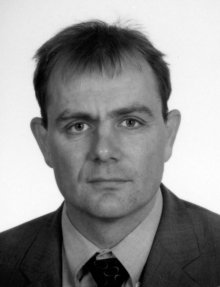
Sigurjón Þórðarson
Flokkur fólksins
Born 1964-06-29
Stúdentspróf MR 1985. BS-próf í líffræði HÍ 1990. Framhaldsnám í fráveitu- og vatnshreinsifræðum (Water Pollution Control Technology) í Cranfield á Englandi. Diploma í opinberri stjórnsýslu HÍ. Vélstjórnarnám við FNV 2023, A-réttindi.
|
227 speeches this session |
32,427 words total |
142 words avg per speech |
Speeches: Speech count (percentile). Attendance: Vote participation rate. Loyalty: Votes aligned with party majority. Breadth: Issue diversity (percentile). Experience: Sessions served (percentile).
Sigurjón Þórðarson: the biologist who counts differently
There is a particular kind of parliamentarian who arrives at every debate carrying the same conviction, regardless of the subject on the order paper. Sigurjón Þórðarson (Flokkur fólksins) is that kind. Whether the topic is the fiscal plan for 2027–2031, the future of Reykjavík airport, or the European emissions-trading scheme, the conversation tends, sooner or later, to arrive at fish — at the science used to manage them, the regions that depend on them, and the freedom he believes Icelanders have lost to catch them. This session he has given 227 speeches across 63 distinct issues, totalling 32,427 words. It is the output of a man who came to parliament with a specialist's quarrel and has never quite let it go.
His route here is unusual. Born in Reykjavík in 1964, Sigurjón trained as a biologist at the University of Iceland, then took postgraduate work in water-pollution control technology at Cranfield in England. For three decades he ran the public-health inspectorate for north-west Iceland, work he still invokes in the chamber as direct evidence rather than abstraction. As recently as 2023 he completed marine-engineering studies and earned A-class certification, and he worked in fish processing and at sea, on and off, until 2024. He first sat in parliament from 2003 to 2007 for the now-defunct Frjálslyndi flokkurinn (Liberal Party), spent years as a substitute member, and returned in 2024 — this time for Flokkur fólksins, representing the north-east. Across ten sessions stretching back to 2003 he has delivered 722 speeches. He is, in the most literal sense, a returning member, and the continuity of his arguments across two decades and two parties is part of what makes him legible.
Two obsessions and a coalition seat
For most of his career Sigurjón's defining theme has been fisheries management — specifically, a sustained and detailed challenge to the science underpinning Iceland's quota system. The argument is not new for him; it is the spine of his politics. In a special debate on marine research in November 2025, he argued that the role of the Marine Research Institute had drifted over the decades, from "looking for fish and new grounds" toward "counting fish and conservation," and that it ought to put utilisation first. He pressed the claim that the recruitment-spawning relationship the current advice assumes "does not exist," and that the original goal of the catch rule — a half-million tonnes of cod in steady-state yield — had been quietly revised downward again and again without ever being met. The remedy he keeps proposing is the same: a second independent opinion on the methodology, experimental local fisheries, the involvement of experienced skippers in advice. To Sigurjón, the question is whether reality is wrong or the models are; he leans, every time, toward the models.
What makes this session distinct is the second role layered on top of the old obsession. Since 2026 Sigurjón has chaired the budget committee (fjárlaganefnd), and that has placed a regional fisheries sceptic at the centre of the government's fiscal machinery. The two halves do not always sit comfortably together, and the friction is instructive. When he speaks on fisheries he is an insurgent, demanding that settled science be reopened. When he speaks on the fiscal plan he is the institution, presenting the majority's report and insisting the assumptions hold. In April he congratulated the government and the nation on a plan he called "responsible and realistic," and chided the opposition for what he heard as needless gloom — "it is not daydreaming to intend to increase value creation." By June, under sharper pressure, he was defending the same plan clause by clause.
The defender's stance
This week's debate on the fiscal plan showed Sigurjón in full institutional mode, and it earned him a place among the chamber's broken records. His defence rested on a single, repeated move: a citation of page 35, where the plan states that economic assumptions are not refreshed every time the central bank issues a new forecast. He invoked it five times to rebut the charge that the plan's foundations had collapsed, and prefaced his assertions seven times with það er alveg ljóst ("it is entirely clear"). The pattern is its own kind of tell. A defender with one document, returning to the same page and the same certainty marker, is a defender determined to make that document suffice — and the repetition betrays how much weight a single line was being asked to carry.
It would be unfair, though, to read the page-35 manoeuvre as evasion alone. Sigurjón's substantive case in the same speech was detailed and consistent with his long-held views: he argued the plan now rests on central-bank forecasts rather than the statistics office's projections, that growth assumptions of around 2.3 percent were cautious, and that real expenditure growth under this government — by his figures, 8 percent over the period — compared favourably with the 19 percent he attributed to the previous administration. Whether those comparisons survive scrutiny is a matter for the opposition; what the speech reveals is a chair who had read the document closely and built his defence on its internal logic rather than on slogans.
Rhetorical DNA
Sigurjón's rhetoric has a recognisable grain. He reaches often for the language of certainty — er alveg ljóst að ("it is entirely clear that") appears 21 times this session, and it is genuinely his: his share of that phrase across the chamber is over 30 percent. He marks his interventions with deference and self-positioning in equal measure — er rétt að taka það fram ("it is right to note"), mér finnst rétt að ("I find it right to") — and he identifies his party out loud, við í Flokki fólksins ("we in the People's Party"), seven times over. He is also, by the catchphrase data, a habitual addresser of one bench in particular: hv. þingmenn Sjálfstæðisflokksins ("the honourable members of the Independence Party") is his most frequent multi-word signature, used a dozen times. His most-debated opponents bear this out — Jón Pétur Zimsen, Sigríður Á. Andersen, Bryndís Haraldsdóttir, all from the Independence benches.
What lifts the rhetoric above procedure is his willingness, occasionally, to reach for something older. Defending the krónur in June's currency debate, he set the question of sovereignty against the calculus of cost and quoted the spirit of the Hávamál: better, he argued, to own little and be independent than to be beholden to others. It is a move that reveals the conviction beneath the committee-chair surface — that some questions are not, as he put it, about krónur og aurar ("kronur and pennies") at all.
Catchphrases
| Phrase | Translation | Count |
|---|---|---|
| er alveg ljóst að | "it is entirely clear that" | 21 |
| hv. þingmenn Sjálfstæðisflokksins | "the honourable members of the Independence Party" | 12 |
| við í Flokki fólksins | "we in the People's Party" | 7 |
| mér finnst rétt að | "I find it right to" | 7 |
| er rétt að taka það fram | "it is right to note" | 6 |
Emotional register
Beneath the technocratic surface, Sigurjón is an MP animated by a regional grievance and an optimist's insistence on what could be done. His warmest passages are not about deficits but about coastal communities — Grímsey losing its right to fish nearby grounds, the grásleppukarl (lumpfish fisherman) as part of the nation's cultural history, the case for keeping value creation, universities, and public bodies anchored outside the capital. When he turned to a private member's bill on forced property sales in October, his register shifted again, toward something close to indignation: he asked why ordinary people who work full days and pay their debts should lose their homes at a fraction of value, citing a case he attributed to fellow members of a 57-million-króna property sold for three. He is loyal almost to the decimal — 99.9 percent with his party this session, a single recorded dissent on the 2026 budget — but the loyalty reads less as discipline than as alignment: he is in a coalition that, for once, lets him pursue the things he has argued for since 2003.
The verdict
Sigurjón Þórðarson is the rare MP whose two roles pull against each other in public, and who carries both without apparent strain. He is the fisheries sceptic who wants settled science reopened, and the budget chair who wants the fiscal plan's assumptions left undisturbed — an insurgent on one file, the institution on another. This week the institution won the larger share of his time, and it cost him a broken-record citation for leaning too hard on a single page. But the consistency across two decades and two parties is the more telling fact: whatever bench he sits on, he is arguing, still, for the regions, for the right to use the resource, and for the conviction that the official numbers deserve a second look. He came to parliament counting fish differently. He has not stopped.
Key Legislation & Votes
Stage key: 1st reading • In committee • 2nd reading • 3rd reading • Enacted
Get Þingfréttir by email
Weekly parliamentary digest — straight to your inbox every Sunday.
Subscribe