L157 #13: The EU Question Goes to the Nation
Editorial: The Week in Parliament
The week the chamber finally let go
Of the seven votes Alþingi held this week, six were on a single resolution. The question put to MPs — and, in just under three months, to the country — was whether Iceland should reopen the EU accession talks frozen in 2014. After roughly fifty hours of plenary debate, the chamber resolved itself into a referendum, then immediately resolved itself back. The final tally on Thursday evening was 34 in favour, 8 against, 14 abstaining. Issue 516 had cleared its last parliamentary hurdle. From 29 August onward, the file no longer belongs to MPs.
The numbers reveal how unusual the moment is. Total speeches rose from 499 to 529 even as votes fell from 25 to 7 — a near-complete collapse of legislative bandwidth into one debate. No new bills were introduced. No committee meetings were recorded. The chamber spent the week doing one thing, and one thing only, with great care. This is the second half of an arc that began on 18 May, when the government's expanded timetable first sucked the oxygen out of every other portfolio; what week 12's debate opened, week 13's vote has now closed.
Look beneath the 34–8–14 surface and the vote breaks into three distinct postures. The coalition — Samfylkingin, Viðreisn and Flokkur fólksins, led by Prime Minister Kristrún Frostadóttir — delivered the yes bloc almost intact: Samfylkingin 14–0, Viðreisn 11–0, Flokkur fólksins 9–0. Miðflokkurinn supplied the entire no column, voting 7 against to a man. The 14 abstentions came from Sjálfstæðisflokkur (10) and Framsóknarflokkur (4) — a coordinated absence from the no/yes binary on the issue most directly tied to one of those parties' own history.
That history is the most awkward fact in the room. Sjálfstæðisflokkur opposed the 2009 application that brought Iceland to the EU's door, and has argued against reopening talks ever since — yet on the vote about whether to ask the country what to do next, it abstained rather than voting no. Across the week as a whole the party absented itself from 27.4% of votes — the highest absence rate of any party, and roughly two and a half times the chamber average. On the EU vote itself it returned 0 yes, 1 no, 10 abstain, and 2 absent. The party did not block the resolution. It did not endorse it. It declined to take a position on the question of taking a position. Stefán Vagn Stefánsson of Framsóknarflokkur articulated a related abstention from a different angle, asking the Prime Minister to reconcile the two-referendum architecture with her own stated power to withhold a deal she dislikes — but the question was a position, not an evasion of one. Sjálfstæðisflokkur offered no equivalent.
The most quietly interesting bloc in the chamber was Flokkur fólksins, who voted 9–0 in favour. The party is, on the substance, sceptical of EU accession; Ásthildur Lóa Þórsdóttir said as much from the floor before voting yes. The distinction the party drew was procedural — that asking the nation is not the same as advocating accession, and that a party whose brand is built on consulting the public can hardly refuse to do so when an actual consultation is on the table. That is a coherent position; it is also a reminder that the yes coalition contains at least one bloc whose campaign in August will look very different from the others'.
The deeper feature of the week was that the two camps were not arguing with each other so much as past each other. The coalition wanted a procedural question: are MPs willing to ask the country, yes or no? Miðflokkurinn refused that framing and argued instead that applying to the EU is the first step of accession itself, so a referendum on talks is functionally a referendum on membership. Both arguments are internally coherent. Neither requires engagement with the other to remain intact. The fifty hours of plenary debate produced very few moments in which a speaker on one side moved a millimetre on a point made by the other; mostly each bloc reinforced its own audience in its own register, and the chamber's job was to let them.
That, in the end, may be the right outcome for an issue this divisive. Parliament has done what only parliament could do: it has settled the question of whether to ask, and handed the question of what to do to the electorate. The campaign that opens now will be sharper, shorter, and addressed to a different audience than the chamber has been. On 29 August Iceland will vote not on accession but on whether to find out what accession would mean. The opposition has been clear that it views an affirmative result as illegitimate in principle; the harder question, and the one the autumn will answer, is whether it will treat such a result as binding in practice. Norway's parliament, Stortinget, did not block its electorate from voting twice on EU membership, and twice the Norwegians said no. The honourable course, win or lose, is the same.
Week at a Glance
|
7
▼ from 25
Votes |
529
▲ from 499
Speeches |
0
▼ from 12
Committee Meetings |
2
▼ from 8
Issues Voted |
Party Voting Patterns
Absence Rate
votes with tallies
Individual Votes
Most Words Spoken
Parliamentary Awards
Session 157 • Recognising the quirks and patterns of Althingi
The Awards Column
When 529 speeches converge on a single resolution and the chamber spends roughly fifty plenary hours on the same question, the award field narrows to a particular kind of competition: not who spoke, but whose construction did the most work. Three speeches stood out for the cleanness of their architecture, and four MPs across the political spectrum fell back on the same phrasings often enough to be worth naming. Notably, all four named awards landed on the EU resolution itself — the rest of the parliamentary week is, this once, missing from this section because the rest of the parliamentary week was missing from the chamber.
Mic Drop of the Week
The single best speech of the week — as judged by our parliamentary critic.
Sigríður Á. Andersen — Miðflokkurinn
The opposition's most forceful speech of the week was also its longest sustained attack on the resolution's constitutional underpinnings. Sigríður Á. Andersen rose on Tuesday afternoon and worked outward from a single premise: that the architecture of the bill misallocates responsibility. Under Iceland's constitutional order, she argued, an accession decision belongs to Alþingi as the body of elected representatives; what the resolution proposes is to outsource that responsibility to the electorate while reserving for the government an effective veto on any deal it disliked.
The construction was patient. She spent the first third of the speech on form rather than substance: the committee's minority had been confined to a sealed reading room for parts of the documentary record, she said, and could not even brief their own parliamentary groups on what they had seen. Then she moved to the substantive trap she had been building toward. Several coalition ministers had stated, including in answer to her own oral questions, that an accession agreement displeasing to the government would not be put to the public at all. If true — and she was using their words, not her characterisation — then the "two referendums" promised by the Prime Minister are conditional on the cabinet's prior approval of the deal.
The closing landed because the architecture earned it: Það er nú allt lýðræðið. Það eru nú öll skilaboðin til þjóðarinnar. Þjóðin fær að ráða þangað til að ríkisstjórnarflokkunum hugnast eitthvað annað. So much for democracy. So much for the whole message to the nation. The people get to decide right up until the governing parties prefer something else. The award recognises the speech's construction — its willingness to build from procedural form before reaching for the rhetorical finish — not the truth of its underlying claim, which the coalition contests on the substance.
“Það er nú allt lýðræðið. Það eru nú öll skilaboðin til þjóðarinnar. Þjóðin fær að ráða þangað til að ríkisstjórnarflokkunum hugnast eitthvað annað.”
So much for democracy. So much for the whole message to the nation. The people get to decide right up until the governing parties prefer something else.
Sigríður Á. Andersen (M) — 2291 words on þjóðaratkvæðagreiðsla um framhald viðræðna um aðild Íslands að Evrópusambandinu (2026-05-26).
The week's most forceful opposition speech reframed the referendum as a constitutional sleight of hand: responsibility for an accession decision rests with Alþingi, she argued, yet the government had said it would withhold any deal it disliked from the public. The closing line distilled the entire opposition case into a single sentence about whose choice this really is.
Sharpest Question
The most incisive question or challenge posed in debate this week.
Stefán Vagn Stefánsson — Framsóknarflokkur
The week's sharpest question came not from Miðflokkurinn but from a party that ultimately chose to abstain. Stefán Vagn Stefánsson built his 295-word intervention on the Prime Minister's own pre-election commitments. Before the November 2024 vote, he reminded the chamber, Kristrún Frostadóttir had set three conditions for pursuing an EU bid: a parliamentary majority for the matter, support from organised labour and the business community, and the economy under control. Stefán Vagn argued that none had been met.
He then turned to her two-referendum architecture and laid the trap. The Prime Minister had said publicly, he noted, that a deal she judged not to be good would not be brought to the nation at all. If so, she — not the public — is the one inspecting the contents of the package: Og verður þá ekki önnur þjóðaratkvæðagreiðsla? Og er það þá í raun og veru þannig að það er hæstv. forsætisráðherra sem er að fara að kíkja í pakkann en ekki þjóðin? (And would there then not be a second referendum? And is it then really the case that it is the Prime Minister who is going to peek into the package, and not the nation?)
The question is sharp because it does not require the questioner to oppose accession in principle. It only requires the listener to take the Prime Minister at her word on two separate occasions and notice that the two statements cannot both be operative. The award recognises that economy of construction — the question cannot be answered without conceding ground, regardless of how the listener feels about the EU itself.
“Og verður þá ekki önnur þjóðaratkvæðagreiðsla? Og er það þá í raun og veru þannig að það er hæstv. forsætisráðherra sem er að fara að kíkja í pakkann en ekki þjóðin?”
And would there then not be a second referendum? And is it then really the case that it is the Prime Minister who is going to peek into the package, and not the nation?
Stefán Vagn Stefánsson (Fr) — on aðkoma þjóðarinnar að samningi um aðild Íslands að ESB (2026-05-28).
He recited the Prime Minister's own three pre-election conditions for an EU bid — a parliamentary majority, backing from labour and business, the economy under control — showed that none had been met, then turned her 'the nation decides' promise against her: if she alone judges which deal is good enough to show the public, who is really opening the package? The question cannot be answered without conceding that the people do not, in fact, get the last word.
Strongest Case
The most persuasive argument or policy case made in debate this week.
Þorgerður Katrín Gunnarsdóttir — Viðreisn
The week's most carefully built positive case came from the Foreign Affairs Minister at the close of the second reading. Þorgerður Katrín Gunnarsdóttir delivered a 2,776-word speech that did the unusual thing of pre-empting the opposition's strongest objections rather than evading them. She conceded that the chamber was not voting on accession itself — only on whether to ask the question. She emphasised that the committee had taken evidence from the Venice Commission, from landskjörstjórn (the National Electoral Commission), from over 250 submitting bodies, and that the wording of the referendum question had been revised in light of expert advice.
The substantive case ran on layered evidence rather than assertion. She cited household mortgage-interest savings she estimated at roughly 100 billion krónur a year under euro membership, the gap between Iceland's 7.75% policy rate and 5.2% inflation, Denmark's defence-opt-out referendum as a precedent for a partial accession arrangement, and an account from an Irish minister of joining the EU specifically to strengthen national sovereignty rather than dilute it. The Irish anecdote did particular work: it reframed the sovereignty question, which Miðflokkurinn had argued from one direction, by introducing a member-state perspective in which integration and autonomy are not opposed.
The closing line was characteristically blunt: Upplýsingar á borðið, takk fyrir (information on the table, please). The award recognises the speech's construction — the willingness to engage opposition arguments at their strongest points and re-anchor the terms of debate — without endorsing the substance of the policy case. Whether the numbers and precedents survive contested examination is a matter for the campaign that begins now.
“Upplýsingar á borðið, takk fyrir.”
Information on the table, please.
Þorgerður Katrín Gunnarsdóttir (V), Foreign Affairs Minister — on þjóðaratkvæðagreiðsla um framhald viðræðna um aðild Íslands að Evrópusambandinu (2026-05-28).
The foreign minister's closing case built the argument from layered evidence rather than assertion — household mortgage-interest savings of roughly 100 billion a year, 7.75% policy rates against 5.2% inflation, Denmark's defence opt-out referendum, an Irish minister's account of joining the EU to strengthen sovereignty — while pre-empting the opposition's strongest objections by repeatedly drawing the line between voting on a deal and voting on membership. By recasting the krónur as a constraint on freedom rather than a symbol of it, she shifted the terms opponents had set.
Broken Record Award
MPs who repeat themselves most — same catchphrases, recycled arguments, and recurring anecdotes across different speeches.
Four MPs were named this week, drawn from across the chamber.
Eyjólfur Ármannsson (Flokkur fólksins). Pressed four times on how the infrastructure minister himself will vote, he answers each time by sending the questioner to read his party leader's newspaper column — the reflex of a man defending a seat he would rather not sit in.
Kristrún Frostadóttir (Samfylkingin). Across four separate question-times the Prime Minister reduces the referendum to one immovable script — the nation gets the first and last word, the government returns with a good deal — repetition that is not evasion but a messaging operation run with metronomic discipline.
Sigurður Ingi Jóhannsson (Framsóknarflokkur). He name-checks his own party five times in a single sitting and brands the process þessa vegferð (this journey) at every turn — language aimed less at winning the argument than at stamping Framsókn's logo on the abstention for the record.
Ingibjörg Davíðsdóttir (Miðflokkurinn). Every intervention arrives at the same single equation — that no state applies to the EU without intending to join, so a referendum on talks is really a referendum on membership — a frame she cannot debate her way out of because it is the whole of her argument.
The four citations sit unusually close together in diagnostic logic. Each speaker was defending a position whose interior had been examined as far as it could be in the available time, and the repetition that the award captures is the sound of that interior running out. The campaign that opens after 29 August will give each of them new material, or expose that the material they have is the material they have.
| Name | Speeches | Top Catchphrase | Uses |
|---|---|---|---|
| Eyjólfur Ármannsson (Ff) | 4 | “sem birtist í Morgunblaðinu” | 3× |
| Kristrún Frostadóttir (Sf) | 9 | “fyrsta og síðasta orðið” | 3× |
| Sigurður Ingi Jóhannsson (Fr) | 8 | “við í Framsókn” | 5× |
| Ingibjörg Davíðsdóttir (M) | 7 | “það er ekkert ríki sem sækir um aðild að Evrópusa…” | 2× |
1. Eyjólfur Ármannsson, Infrastructure Minister (Flokkur fólksins)
Pressed four times on how the infrastructure minister himself will vote, he answers each time by sending the questioner to read his party leader's newspaper column — the reflex of a man defending a seat he would rather not sit in.
- “sem birtist í Morgunblaðinu” (3×) — Three of four answers redirect the questioner to Inga Sæland's weekend Morgunblaðið op-ed 'Í dóm þjóðarinnar' instead of giving his own position.
- “ég tel að við eigum að gera meira af því” (4×) — Deflects every direct question into a generic endorsement of holding more referendums in future, sidestepping the specific question put to him.
- “afstaða Flokks fólksins” (3×) — Falls back on 'the party's position is clear' as a closing move while declining to state his own vote.
2. Kristrún Frostadóttir, Prime Minister (Samfylkingin)
Across four separate question-times the Prime Minister reduces the referendum to one immovable script — the nation gets the first and last word, the government returns with a good deal — repetition that is not evasion but a messaging operation run with metronomic discipline.
- “fyrsta og síðasta orðið” (3×) — Her fixed one-line framing of the two-referendum process, repeated near-verbatim across unrelated questions.
- “að við fáum góðan samning” (3×) — Treats 'a good deal' as the settled premise of the talks, deployed whenever pressed on what a 'yes' actually commits to.
- “ef við fáum umboð” (4×) — The conditional 'if we get a mandate' returns every challenge to her prepared ground.
3. Sigurður Ingi Jóhannsson (Framsóknarflokkur)
He name-checks his own party five times in a single sitting and brands the process 'this journey' at every turn — language aimed less at winning the argument than at stamping Framsókn's logo on the abstention for the record.
- “við í Framsókn” (5×) — Anchors successive interventions by naming the party rather than the argument, turning each speech into a party-position bulletin.
- “í þessa vegferð” (4×) — 'This journey' recurs as his standing, faintly disapproving label for the accession process across two issues.
Data sourced from Althingi Open Data (althingi.is). Generated 2026-05-31.
MP Spotlight
A deep dive into one parliamentarian each week
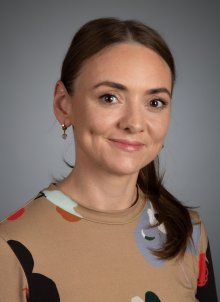
Dagbjört Hákonardóttir
Samfylkingin
Born 1984-07-14
Stúdent MH 2004. BA lögfræði HÍ 2008. Mag. juris HÍ 2010.
|
170 speeches this session |
41,439 words total |
243 words avg per speech |
Speeches: Speech count (percentile). Attendance: Vote participation rate. Loyalty: Votes aligned with party majority. Breadth: Issue diversity (percentile). Experience: Sessions served (percentile).
Dagbjört Hákonardóttir — the lawyer in the room
When the Miðflokkur deputy Nanna Margrét Gunnlaugsdóttir accused her, on Tuesday afternoon, of deliberately concealing documents from the public in a "secret room" inside the parliament building, Dagbjört Hákonardóttir did not raise her voice. She raised the standing orders. The documents in question, she replied, were unrelated to the referendum being debated; they concerned bilateral discussions begun under previous governments; they had been provided to the foreign affairs committee in confidence for sound reasons of state interest. Then came the sting: Vinnið vinnuna ykkar — do your jobs. Read the documents you've been offered, she told the minority, and then come back and demand they be released. The implication was clear enough. The opposition was not denied the papers. The opposition declined to look at them.
This is what Dagbjört does. She is forty-one, a Reykjavík-trained jurist (Magister juris, HÍ 2010), and a parliamentary newcomer by Alþingi's standards — she has held a seat in her own right only since September 2023. But in the week's most consequential debate, she rose ten times for a total of about 1,739 words, more than any other government backbencher, and the speeches were not filler. They were tactical, technical, and addressed to the precise weakness the opposition had chosen to attack: the foreign affairs committee's procedural conduct. That she was in a position to defend it from the inside is the result of a deliberate political trajectory.
A lawyer's career, repurposed
Dagbjört arrived at parliament from a particular branch of Icelandic public service. After graduating, she worked as a lawyer at the office of the Umboðsmaður skuldara (Debtors' Ombudsman) from 2010 to 2014 — the post-crisis institution created to handle household over-indebtedness. From there she moved to the Umboðsmaður borgarbúa (Reykjavík City Ombudsman), then to the office of the city CEO, and from 2018 to 2023 served as Reykjavík's data protection officer. That is a fifteen-year run through rights-based public-sector lawyering: the side of the legal profession that builds files, drafts opinions, and lives with administrative procedure.
The political biography runs in parallel. She joined the Framkvæmdastjórn Ungra jafnaðarmanna (executive of Young Social Democrats) in 2003, served on the University of Iceland student council for Röskva, and from 2011 to 2013 chaired Ungir Evrópusinnar — Young Europeans, Iceland's pro-EU youth organisation, founded in the wake of the 2009 application. She has been a Europeanist for the entire span of her adult political life. The current debate is not an opportunity she has converted into a portfolio. It is the file her career has been steadily preparing her to handle.
The committee assignments reflect that. On the 157th Alþingi she sits on the foreign affairs committee, chairs the Nordic Council delegation, and serves on the joint Iceland–EU parliamentary committee. When the EU accession resolution arrived in committee, she was one of the natural rapporteurs of its majority view. Her speeches across the session bear the marks of that role: extended treatments of bókun 35 (Protocol 35 of the EEA Agreement), of Schengen, of the Draghi report on European competitiveness, of UN Security Council Resolution 1325 on women, peace and security. The technicalities are not decoration. They are how she argues.
Two registers, one position
The most interesting thing about Dagbjört's contribution to the EU debate is the mix of registers. She is comfortable in the legal-technical mode that committee work demands; she also reaches deliberately for emotional vocabulary that lawyers usually avoid. On 28 May, casting her own vote, she said it gave her mikið þjóðarstolt (great national pride) to support the resolution: to opna þessar dyr og taka slaginn fyrir Ísland (open these doors and take the fight for Iceland). Three speeches earlier she had been parsing the Venice Commission's recommendations on referendum question wording. The same MP, the same hour.
That dual register is the closest thing she has to a signature. In her January speech on the foreign minister's annual report — 1,842 words, one of her longer interventions of the session — she quoted Olof Palme on the foreign policy of small states ("not credible unless it rests on moral firmness, not military strength"), then immediately pivoted to development assistance, women in peace negotiations, and the budgetary pressures created on Iceland by imported inflation traceable to the war in Ukraine. The structural move is consistent: anchor the position in a recognisable social-democratic frame, then ground it in technical detail the opposition cannot easily contest without sounding underprepared.
Her case for Europe runs on the same architecture. In an April speech on the foreign minister's report on international affairs, she returned to the Nordic Council of Ministers' analysis of Nordic value chains, the question of viðnámsþróttur (resilience) in small economies, and the awkward fact — awkward, that is, for her own coalition — that the Nordic neighbours are not all in the same customs arrangement. The argument is not "Europe is wonderful." It is "the conditions under which a small Atlantic economy preserves room for manoeuvre have changed, and the cost of not asking the question is greater than the cost of asking it."
The catchphrases — and what they reveal
Across her session-157 corpus of 170 speeches and roughly 41,400 words, the phrases that surface most distinctively are hvað sem öðru líður (whatever else may be the case) at eleven occurrences and upp að vissu marki (up to a certain point) at six. They are the verbal equipment of someone who concedes the other side's case in part and then steps around the concession. Lawyer phrases. The third distinctive phrase, og gera ýtrustu kröfur (and make the strongest demands), occurs four times in connection with what Iceland should ask for at a hypothetical negotiating table. The pattern is consistent: bracket what you cannot win, then maximise what you can.
| Phrase | Count | Function |
|---|---|---|
| hvað sem öðru líður — whatever else may be the case | 11 | Concession-bracket |
| koma því á framfæri — to put on the record | 7 | Procedural marker |
| upp að vissu marki — up to a certain point | 6 | Partial concession |
| og gera ýtrustu kröfur — and make the strongest demands | 4 | Negotiating frame |
| að kynna sér þau gögn — to acquaint oneself with the documents | 4 | Tuesday's accusation, in shorthand |
The last entry is not metaphor. She really did urge minority members of the foreign affairs committee to read the disputed documents and then make their case for declassification on an informed basis. It is the litigator's instinct: do not concede on disputed facts; force the other side onto the record first.
The room she occupies in her own party
Dagbjört is, by voting record, almost perfectly loyal. The data tells the story without commentary: 909 votes, 99.5% loyalty, four dissents in the session — three of them notified absences on specific issues (the closure of the east-west runway at Reykjavík airport, ownership concentration in the fishing industry, public-sector pay), one breach with the party on the kílómetragjald (per-kilometre vehicle charge) in December. None of those carries the weight of a coalition flashpoint. She is not a freelancer. She is, in the most direct sense, where Samfylkingin needs her to be.
What she brings to that loyalty is something the party has been short on for a decade: a parliamentarian who can do technical foreign-policy work in real time. The Foreign Affairs Minister is Þorgerður Katrín Gunnarsdóttir of Viðreisn; the brief is allocated outside Samfylkingin. But the resolution that passed on Thursday is co-owned by all three coalition parties, and someone on the Samfylkingin benches has to be in a position to absorb a minority assault on committee procedure. That was Dagbjört on Tuesday afternoon, and the speech she gave — pointed, civil, technically tight — is the kind that does not produce headlines and does produce votes.
The verdict
What is most striking about Dagbjört's session is how little of it is for the camera. The flagship phrases that did the week's political work belonged to the Prime Minister and the Foreign Affairs Minister; the broken-record listings went to the leaders of the major blocs; the mic drop went to Sigríður Á. Andersen. Dagbjört's contributions sit underneath those — committee defences, procedural framings, the technical wing of the case for asking the question. She is not the face of the coalition's EU push. She is the person the coalition's EU push relies on to hold the committee record in good order.
There is a risk in that role: the lawyer's discipline can shade into a defensiveness that voters read as evasion. The accusation of a leyniherbergi (secret room) is potent precisely because it cannot be answered without sounding pedantic. Her response — read the file, then make your demand — is the right answer in committee, and a difficult answer on social media. Whether she can move that argument from the chamber to the campaign trail without losing the technical precision that makes it work is the open question of the next three months. The referendum on 29 August will test more than the country's appetite for Europe. It will also test whether the form of advocacy she has spent her career building has audiences beyond the room she is currently in.
Key Legislation & Votes
Stage key: 1st reading • In committee • 2nd reading • 3rd reading • Enacted
Get Þingfréttir by email
Weekly parliamentary digest — straight to your inbox every Sunday.
Subscribe