L157 #11: Built on Sand
Editorial: The Week in Parliament
The finance minister walked out of the chamber while fourteen criticisms of his own fiscal plan were being read aloud. That detail, relayed by Guðlaugur Þór Þórðarson (Sjálfstæðisflokkur, Independents' Party) in the chamber on 14 April, was not the most damaging thing said during the week's debate on the fjármálaáætlun (fiscal plan) for 2027–2031. But it was, perhaps, the most eloquent.
The plan itself is a coalition statement of intent: deficit eliminated in 2027 for the first time since 2018, debts declining as a share of GDP, government ambition constrained. Finance Minister Daði Már Kristófersson laid out the rationale with characteristic directness — stability rules exist precisely to prevent what Iceland spent the last decade doing. The counterargument, from Guðlaugur Þór and Karl Gauti Hjaltason of Miðflokkurinn (Centre Party), was equally clear: fjármálaráð (the Fiscal Council), the statutory watchdog that ministers themselves appoint, issued what Karl Gauti called a falleinkunn — a failing grade — across fourteen substantive criticisms. Index-linking of social security benefits undermines the spending cap. The stability rule is opaque, measured against the government's own estimates of its own costs. The productivity growth that underpins the projections is assumed rather than demonstrated. Debt falls only if optimistic economic forecasts hold. The government, both opposition MPs argued, has adopted the vocabulary of fiscal responsibility while leaving the substance largely unaddressed.
What gave the critique its unusual force was the rhetorical move both men independently reached for: disavowal of authorship. "These are not my words," Guðlaugur Þór said. "These are not the opposition's words. These are not the words of the government's political opponents. This is the professional assessment of the fiscal council — the professional assessment of the fiscal council." Karl Gauti landed on the same ground: "This is fjármálaráð, this is not me." The argument was designed to be unanswerable — attack the critics and you are attacking the institution the government created.
The coalition's response had two components. Daði Már, when present in the chamber, argued that fjármálaráð always issues recommendations and governments always proceed anyway; this is what the institution is for. Dagur B. Eggertsson of Samfylkingin (the Social Democrats) called Guðlaugur Þór "rather dramatic" and pointed to debt reduction from the Íslandsbanki sale and settlements of the ÍL-Fund. There is a legitimate version of this defence: fiscal councils are designed to be demanding, and meeting every recommendation simultaneously would require spending cuts the opposition is in no position to specify. Neither opposition camp offered a precise counter-budget. But the government's response also did not engage the criticisms on their merits — it questioned the relevance of having made them. That is a different kind of argument, and a weaker one.
The week had a secondary thread. Landsskjörstjórn (the National Electoral Commission) ruled that the question wording proposed by Foreign Affairs Minister Þorgerður Katrín Gunnarsdóttir (Viðreisn, Reform Party) for the planned EU referendum is gildishlaðið — value-laden — blocking the process procedurally. The dispute is substantive: the question assumes that Iceland's 2009 EU membership application remains live, which opponents contest. Sigmundur Davíð Gunnlaugsson argued in the chamber that the government had told parliament and the country something untrue about the nature of the negotiations. The government disputes this. What is not disputed is that the wording will need revision before a referendum scheduled for 29 August — with local elections in May consuming the political calendar in between.
The approved business moved more quietly. VAT on fuel was cut from 24% to 11% from 1 May through August, with an estimated 0.3% reduction in the consumer price index, costing the treasury an estimated 3.5 billion krónur. The Íslandsbanka fiscal council, which the coalition has staked so much of its credibility upon, duly noted in its review of the fuel VAT measure that a temporary cut creating expectations of further relief is not, strictly speaking, good fiscal discipline. The government approved it anyway. Sometimes the institution created to be demanding is merely inconvenient.
Viðreisn was the only party to register zero absences in the week's sole tallied vote, a procedural division on the VAT bill. Sjálfstæðisflokkur (the Independence Party) had five members absent from that same vote — the largest raw count, though the Framsóknarflokkur (Progressive Party) had the highest absence rate at 40% of its bench. Neither reflects dramatically on voting discipline for a procedural motion; what it reflects is that 853 speeches were delivered this week, concentrated heavily on two issues, and the chamber's attention was not equally distributed.
The fiscal plan will now advance to committee. Dagur argued in the chamber that fjárlaganefndin (the Budget Committee) should review the fiscal council's criticisms systematically, as it did last year. That is a sensible institutional suggestion. Whether the committee's review produces real adjustments or produces a document that endorses the government's existing position with academic footnotes is a question the committee chair, not any opposition MP, will answer.
Week at a Glance
|
17
Votes |
853
Speeches |
0
Committee Meetings |
8
Issues Voted |
Party Voting Patterns
Absence Rate
Most Words Spoken
Parliamentary Awards
Session 157 • Recognising the quirks and patterns of Althingi
The Awards Column
The fiscal plan debate generated 80 speeches, 853 total for the week, and a single question that broke through the noise: who actually wrote the fourteen criticisms? Opposition MPs kept answering — fjármálaráð, not us — and the coalition kept changing the subject. Against that backdrop, the week's awards reflect a debate that was technically about macroeconomic projections but was really about institutional credibility.
Mic Drop of the Week
The single best speech of the week — as judged by our parliamentary critic.
Karl Gauti Hjaltason (Miðflokkurinn — Centre Party) delivered the week's most constructed speech on 14 April during the first debate on the fjármálaáætlun (fiscal plan) for 2027–2031.
Karl Gauti built the speech in two movements. The first was systematic: fjármálaráð's assessment constitutes, in his characterisation, a falleinkunn — a failing grade — and he worked through the council's criticisms in sequence, pausing at each one to translate the technical language into something an MP without an economics degree could follow. Index-linking of social security benefits creates a structural conflict with the spending cap. The stability rule is measured by the government against its own estimates. The productivity growth assumptions are not supported by data. He treated the 40-to-50-page assessment not as background material but as the speech itself.
The second movement was rhetorical. Having established the technical case, he shifted register entirely:
"Stöðugleikareglan ... er byggð á sandi sem hæstv. ríkisstjórn hefur hlaðið undir hana. Sandi, frú forseti, sem stjórnvöld hafa skrapað að henni og mun skolast burt í fyrstu bleytum."
"The fiscal stability rule ... is built on sand that the government has piled under it. Sand, Madam Speaker, that the authorities have scraped together — and that will be washed away at the first rain."
The sandcastle image did what no balance-sheet number could: it gave the entire technical critique a single physical form, something that holds its shape until it doesn't. The structure of the speech — meticulous enumeration followed by a single collapsing image — is what earns it this award. The content, as Karl Gauti was careful to note, belonged to fjármálaráð. The construction was his.
“Stöðugleikareglan ... er byggð á sandi sem hæstv. ríkisstjórn hefur hlaðið undir hana. Sandi, frú forseti, sem stjórnvöld hafa skrapað að henni og mun skolast burt í fyrstu bleytum.”
The fiscal stability rule ... is built on sand that the government has piled under it. Sand, Madam Speaker, that the authorities have scraped together — and that will be washed away at the first rain.
Karl Gauti Hjaltason (M) — 907 words on fjármálaáætlun fyrir árin 2027–2031 (2026-04-14).
Karl Gauti enumerated fjármálaráð's criticisms of the fiscal plan, translated 'falleinkunn' into plain speech — then landed on the image of the stability rule as a sandcastle the government has piled up, destined to wash away at the first rain. The metaphor did what no number could: turned professional critique into a single collapsing structure.
Sharpest Question
The most incisive question or challenge posed in debate this week.
A nine-week opposition streak on the Sharpest Question ended when Dagur B. Eggertsson (Samfylkingin — Social Democrats) used a two-minute andsvar (response right) on 14 April to sidestep the entire framing of the fiscal plan debate.
While opposition MPs were pressing the government on whether its projections were too optimistic, Dagur turned the question structural. His observation — delivered inside a coalition MP's response slot — was that Iceland maintains three separate accounting frameworks for the same public finances: one in the budget, one in the state accounts, and a third on the national accounts basis in the fiscal plan. The construction of the question was its strength:
"Að vera með eitt uppgjör í fjárlögum og annað í ríkisreikningi og svo þriðja á þjóðhagsgrunni í fjármálaáætlun er ekki til að auðvelda fólki að fylgja þræðinum, jafnvel ekki þingmönnum sjálfum heldur."
"Having one accounting in the budget, another in the state accounts, and yet a third on the national-accounts basis in the fiscal plan does not make it easy for anyone to follow the thread — not even for MPs themselves."
The parliamentary sleight of hand here is worth noting. Dagur is the Social Democrats' leader; his party is in coalition with the government. The question does not attack the fiscal plan — it questions the accounting architecture that makes the plan's numbers difficult to interrogate. That is a different intervention. It turns a defensive coalition minute into the week's most structural challenge, directed not at political opponents but at the informational deficit that benefits whoever controls the framing. The self-referential sting — "not even for MPs themselves" — is the question landing.
“Að vera með eitt uppgjör í fjárlögum og annað í ríkisreikningi og svo þriðja á þjóðhagsgrunni í fjármálaáætlun er ekki til að auðvelda fólki að fylgja þræðinum, jafnvel ekki þingmönnum sjálfum heldur.”
Having one accounting in the budget, another in the state accounts, and yet a third on the national-accounts basis in the fiscal plan does not make it easy for anyone to follow the thread — not even for MPs themselves.
Dagur B. Eggertsson (Sf) — on fjármálaáætlun fyrir árin 2027–2031 (2026-04-14).
In a two-minute andsvar on the fiscal plan, Dagur sidestepped the opposition's spending critique by naming the structural reform everyone ignored: separate investment from operations in the public accounts. Three different reckonings for the same money, he said, doesn't help anyone follow the thread — not even MPs. The move turned a defensive minute into the week's most structural question.
Strongest Case
The most persuasive argument or policy case made in debate this week.
Guðlaugur Þór Þórðarson (Sjálfstæðisflokkur — Independence Party) is this week's Spotlight MP, and the overlap is handled here by describing the architecture of his argument rather than its content, which appears in the profile section.
Across three speeches on 14 April, Guðlaugur Þór assembled a case that escalated with each appearance. The first speech read the fourteen criticisms into the record. The second demanded to know which, if any, the Finance Minister intended to address. The third observed that the minister had again left the chamber before the debate concluded. The three speeches were designed to be read together: the document, the response, the absence.
The key passage:
"Þetta eru ekki mín orð. Þetta eru ekki orð stjórnarandstöðunnar. Þetta eru ekki orð pólitískra andstæðinga ríkisstjórnarinnar. Þetta er faglegt álit fjármálaráðs — faglegt álit fjármálaráðs."
"These are not my words. These are not the opposition's words. These are not the words of the government's political opponents. This is the professional assessment of the fiscal council — the professional assessment of the fiscal council."
The fourfold denial — my words, opposition words, political opponents' words, council's assessment — is a rhetorical move that strips the coalition of its standard response. Attacking the speaker is the expected defence; the speech was constructed so that attacking the speaker would require attacking the institution. Whether that argument holds up to scrutiny is a separate question from whether it works as parliamentary rhetoric. In the chamber on 14 April, it worked.
“Þetta eru ekki mín orð. Þetta eru ekki orð stjórnarandstöðunnar. Þetta eru ekki orð pólitískra andstæðinga ríkisstjórnarinnar. Þetta er faglegt álit fjármálaráðs — faglegt álit fjármálaráðs.”
These are not my words. These are not the opposition's words. These are not the words of the government's political opponents. This is the professional assessment of the fiscal council — the professional assessment of the fiscal council.
Guðlaugur Þór Þórðarson (Sj) — on fjármálaáætlun fyrir árin 2027–2031 (2026-04-14).
Across three speeches on the fiscal plan, Guðlaugur Þór built a single escalating case — fjármálaráð listed fourteen substantive criticisms, the finance minister walked out of the chamber while they were read, and the government's response was that none of it matters. The argument was not his, he kept saying, but the statutory fiscal watchdog's — and that was its force.
Broken Record Award
MPs who repeat themselves most — same catchphrases, recycled arguments, and recurring anecdotes across different speeches.
Tómas Þór Þórðarson (Sjálfstæðisflokkur): Four of seven speeches directed at Dagur B. Eggertsson by name — Tómas is not debating the budget, he is prosecuting one coalition MP. The repetition is targeting, not topic.
Stefán Vagn Stefánsson (Framsóknarflokkur — Progressive Party): Four speeches opening with áhyggjur af því ("I have concerns about this") across the fiscal plan debate — the concerned-observer pose that registers opposition while leaving the counter-proposal conveniently off the table.
Þorgerður Katrín Gunnarsdóttir (Viðreisn — Reform Party): Hvort sem það eru and að mínu mati are not hesitation — they are the diplomatic register the Foreign Affairs Minister's chair installs, deployed so consistently that even domestic budget debate now speaks in measured caveat.
Sigurjón Þórðarson (Flokkur fólksins — People's Party): Það er alveg ljóst ("it is entirely clear") plus snúa við hallarekstri liðinna ára ("reversing the deficits of past years") — a coalition MP under fiscal fire reaches for declaration-as-fact and blame-the-predecessor whenever the numbers are questioned.
Daði Már Kristófersson (Viðreisn): Four er það auðvitað ("of course it is") prefaces in eleven replies — each answer framed as a pre-settled matter where the ministerial position is the given and the question is merely the occasion to restate it.
| Name | Speeches | Top Catchphrase | Uses |
|---|---|---|---|
| Tómas Þór Þórðarson (Sj) | 7 | “þm degi b eggertssyni” | 4× |
| Stefán Vagn Stefánsson (Fr) | 5 | “áhyggjur af því” | 4× |
| Þorgerður Katrín Gunnarsdóttir (V) | 7 | “hvort sem það eru” | 3× |
| Sigurjón Þórðarson (Ff) | 12 | “það er alveg ljóst að” | 4× |
| Daði Már Kristófersson (V) | 11 | “er það auðvitað” | 4× |
1. Tómas Þór Þórðarson (Sjálfstæðisflokkur)
Four of seven speeches addressed to Dagur B. Eggertsson — Tómas is not debating the budget, he is prosecuting one coalition MP. The repetition is targeting, not topic.
- “þm degi b eggertssyni” (4×) — Names the same coalition MP 4 times across 7 speeches — a focused duel rather than normal cross-aisle response.
- “vil þakka hv þm degi b eggertssyni” (2×) — Extended form; each 'thank you' precedes a rebuttal.
2. Stefán Vagn Stefánsson (Framsóknarflokkur)
Four speeches that open with 'áhyggjur af því' are not analysis — they are the concerned-observer pose that registers opposition while leaving the counter-proposal conveniently off the table.
- “áhyggjur af því” (4×) — Signature 'I have concerns about this' framing — 4 occurrences across 5 speeches used to register opposition without proposing alternatives.
- “að ég hef áhyggjur af því að” (2×) — Expanded form of the same concerned posture.
3. Þorgerður Katrín Gunnarsdóttir, Foreign Affairs Minister (Viðreisn)
'Hvort sem það eru' and 'að mínu mati' are not hesitation — they are the diplomatic register the Foreign Minister's chair installs, used so often that even domestic debate now speaks in caveat.
- “hvort sem það eru” (3×) — All-encompassing framing 'whether it is X or Y' — used to sweep disparate cases under a single argument.
- “að mínu mati” (4×) — Personal-opinion marker at 57% frequency — 4 of 7 speeches.
- “hvort sem það” (4×) — Shortened form; 4 occurrences across 7 speeches.
Data sourced from Althingi Open Data (althingi.is). Generated 2026-04-19.
MP Spotlight
A deep dive into one parliamentarian each week
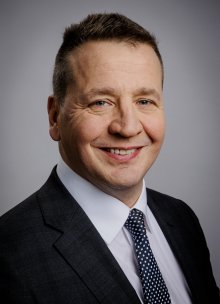
Guðlaugur Þór Þórðarson
Sjálfstæðisflokkur
Born 1967-12-19
Stúdentspróf MA 1987. BA-próf í stjórnmálafræði HÍ 1996.
|
320 speeches this session |
67,283 words total |
210 words avg per speech |
Speeches: Speech count (percentile). Attendance: Vote participation rate. Loyalty: Votes aligned with party majority. Breadth: Issue diversity (percentile). Experience: Sessions served (percentile).
Twenty-nine sessions at Alþingi. Five ministerial portfolios across four governments. Four thousand and eighty-three speeches delivered, amounting to more than half a million words on the parliamentary record. Guðlaugur Þór Þórðarson has been in the chamber long enough to have seen the stability rules he now criticises drawn up from scratch, debated, and passed with cross-party consensus — a consensus he helped build. He has also been a minister long enough to understand why governments treat fiscal watchdog recommendations as advisory rather than mandatory. He is, in other words, difficult to dismiss.
Born in Reykjavík in December 1967, Guðlaugur Þór entered the Alþingi in 2003 and has not left. His career spans an unusual arc: Reykjavík city council work through the early 2000s, the Health Ministry from 2007 to 2009 across two Independence-led governments, the Foreign Ministry from 2017 to 2021 — including the turbulent years of Brexit and the pandemic — and finally the Environment, Energy and Climate Ministry from 2021 until the Frostadóttir coalition took office in December 2024. He led the Sjálfstæðisflokkur (Independence Party) parliamentary group for a year in 2016–2017. He now serves on fjárlaganefnd (the Budget Committee), the committee whose work will determine whether the government's fiscal plan faces serious scrutiny or comfortable endorsement.
The institutional argument
What distinguishes Guðlaugur Þór in session 157 is not volume — though at 320 speeches and 67,283 words he is among the most active MPs — but method. He does not attack the government's fiscal ambitions directly; he attacks the distance between those ambitions and the framework the government itself endorsed. In September 2025, at the very first reading of the 2026 budget, he made the argument plain: everything the Finance Minister said ought to be done was not being done. He returned to the same ground in December's budget debates and again in April's fiscal plan discussion. The line of attack has not shifted because the underlying position has not shifted: a government that adopts the language of fiscal rules while weakening the rules' substance has made a choice, and that choice has consequences for inflation and interest rates that fall disproportionately on those least able to absorb them.
The move he reached for on 14 April — reading fjármálaráð's fourteen criticisms directly into the record, one by one — was a technique borrowed from legal practice. It creates a public document. It makes the dismissal of each criticism explicit and attributable. And it transfers the burden: the government is not being asked to respond to an opposition politician's critique; it is being asked to explain why the institution it created, staffed, and tasked with oversight has reached conclusions it has chosen to ignore.
The foreign policy chapter
A second thread runs through session 157 that separates Guðlaugur Þór from most of his colleagues in the opposition: the EU question. He served as Foreign Minister during Iceland's decision to suspend accession negotiations in 2013 and then again when the application was formally withdrawn in 2015. He understands the procedural architecture better than almost anyone currently in the chamber. That knowledge makes his attacks on the government's EU referendum framework precise rather than broad. His argument — that what is being presented as a consultative vote on whether to continue exploratory discussions is actually a commitment to a process Iceland cannot exit without political cost — is contested by the coalition, but it is grounded in procedural knowledge that is not easily dismissed as political theatrics.
Dagur B. Eggertsson called him "rather dramatic" during the fiscal plan debate. There is something to that. Guðlaugur Þór's register tends toward forensic outrage — the detail assembled, the implication drawn out, the question posed and left hanging when the minister is absent from the chamber. His most-used trigrams in session 157 are connective phrases: vegna þess að (because of), af því að (because), til þess að (in order to). The reasoning runs through the speeches rather than arriving as a set piece. What he builds is less a rhetorical moment than an accumulation.
His dissent record from 645 votes in this session tells a version of the same story: three departures from the party line, all in the direction of voting já when the party majority abstained or voted nei — on the 2026 budget and on two votes related to multi-owner housing. The loyalty figure of 99.4% is not the behaviour of someone navigating an internal party faction. It is the behaviour of someone confident in their position and content to argue it on its merits.
The rhetorical register
Virðulegi forseti — the formal address to the Speaker — appears 103 times in session 157 in the full three-word phrase virðulegi forseti ég, and another 67 times in the variant virðulegi forseti að. The repetition is less a tic than a breath: it marks the transition between argument and evidence, between accusation and proof. The cadence is recognisable after a few speeches. The setup is the institutional claim or the procedural violation; the follow-through is the specific number or the specific quote from fjármálaráð's assessment. He asks questions he already knows the ministers will not answer, then treats the non-answer as its own data point.
Karl Gauti Hjaltason of Miðflokkurinn has faced Guðlaugur Þór across the aisle 29 times in session 157 — the fifth-highest individual matchup in his debate record. The two men are, in formal terms, coalition and opposition. But their fiscal arguments this week were so structurally similar that the distinction nearly dissolved. Both reached for fjármálaráð's authority rather than their own. Both translated the watchdog's technical language into plain speech for the chamber. The difference is that Karl Gauti's party is nominally supporting the same government whose fiscal plan he was describing as a failing grade. Guðlaugur Þór's party is not.
The verdict
Twenty-nine sessions leave marks. Guðlaugur Þór's breadth score — the proportion of distinct parliamentary issues he has spoken to — sits at 19.7% in session 157, below the median for MPs with his experience. He is not a generalist. He is, at this point in his career, a specialist in the gap between what governments say about fiscal responsibility and what they do about it. The irony is that he spent seventeen years in government. He knows from the inside how these gaps open.
The opposition doesn't always want to close the gap. Sometimes it wants to measure it, record it, and read it into the parliamentary record with the Finance Minister absent from the chamber.
Key Legislation & Votes
Legislation Advancing
Legislation Advancing
| Issue | Title | Stage | Vote |
|---|---|---|---|
| #607 | virðisaukaskattur og samkeppnislög | Awaiting 2nd reading | Bill advances |
Stage key: 1st reading • In committee • 2nd reading • 3rd reading • Enacted
Get Þingfréttir by email
Weekly parliamentary digest — straight to your inbox every Sunday.
Subscribe