L157 #10: New Words, Same Pressures
Editorial: The Week in Parliament
Picture the chamber on Friday afternoon: an amendment goes to a vote, loses 20–33, sits down, and another one stands up. Then another. By the time the sóttvarnalög — Iceland's Epidemic Prevention Act — finally cleared its third reading, the scoreboard showed 34 separate divisions on a single bill. For context, the entire previous week produced 25 votes total, across all legislation. The Alþingi was not debating whether to update pandemic legislation. It was conducting an extended tutorial on parliamentary arithmetic: the opposition can make the process uncomfortable, but it cannot change the result.
The answer to the implied question was delivered ten times over: 33–20, 33–19, 33–21, the coalition holding on every contested amendment, the bill eventually passing 47 to zero with seven abstentions. What looks like legislative chaos was in practice a precise demonstration of majority discipline. Whether that discipline reflects good governance or a majority that has stopped genuinely listening is the question neither side will answer honestly — the coalition because the answer is inconvenient, and the opposition because the real purpose of forcing 34 votes was never to win any of them. It was to build a record.
The visa bill, vegabréfsáritanir, told a different story about the same arithmetic. It passed Thursday 30–14–9, but the abstentions carry the weight: Miðflokkurinn's eight MPs withheld entirely; Sjálfstæðisflokkurinn's twelve did the same. Together they represent the larger share of the formal opposition, and together they chose neither endorsement nor defeat. On a question as charged as visa processing authority, abstention is not a blank — it is a position that lets both sides claim they made the reasonable choice.
The week's most substantive debate was quieter than either of those. Nanna Margrét Gunnlaugsdóttir of Miðflokkurinn (the Centre Party) opened a discussion on the future of the state's 45 wholly or partly owned companies, asking what taxpayers actually receive for a capital allocation that runs into hundreds of billions of krónur. Finance Minister Daði Már Kristófersson — who speaks in parliament as a minister but does not vote, being the one member of cabinet who is not an MP — gave a measured defence: the rationale for state ownership evolves, oversight mechanisms are being strengthened, specific targets for returns on equity are being set. He acknowledged that the case for holding individual companies changes over time, and declined to say more. Bergþór Ólason of Miðflokkurinn pressed harder, arguing that the arm's-length governance model has made it nearly impossible for parliament to get information out of these entities. Stefán Vagn Stefánsson of Framsóknarflokkur (the Progressive Party) made the structural point that should unsettle any government claiming fiscal responsibility: parliament's budget process now fights over tens of millions at the margins, while state companies invest billions annually with minimal legislative oversight. He was accurate, and Daði Már did not dispute the arithmetic — he reframed it. That is a government that has thought carefully about what it is prepared to say.
The other financial pressure in the chamber was inflation, where the week produced its sharpest exchange. Jens Garðar Helgason of Sjálfstæðisflokkurinn asked Daði Már directly whether the commitments on fiscal restraint — no flat cuts, no tax increases — still stand as prices continue rising. Daði Már confirmed they do, adding that the fjármálaáætlun 2027–2031, tabled quietly Thursday, will contain specific rather than generic measures. Stefán Vagn, in an exchange that illustrated his party's ambiguous relationship with the coalition it could in theory support, welcomed what he called a change of tone from Daði Már while simultaneously noting it contradicted weeks of messaging from Prime Minister Kristrún Frostadóttir. Kristrún has insisted the plan is working; Daði Már appeared to be hedging. Rósa Guðbjartsdóttir of Sjálfstæðisflokkurinn argued for targeted tax reductions — fuel levies, food VAT — as tools that have worked elsewhere, citing Sweden. The coalition dismissed the proposals, which is probably correct on fiscal grounds and certainly convenient on political ones.
Three bills passed to committee and are worth tracking: the child protection act (barnavernd), the child welfare strategy to 2030 (stefna um farsæld barna til ársins 2030), and the pension supplement reform that would allow supplementary contributions to reduce mortgage principal (skyldutrygging lífeyrisréttinda). The last of these is the government's most politically legible housing policy move this session; getting it to committee before Easter is a scheduling win.
Procedural frustration ran as a thread through the week. Jón Gunnarsson of Sjálfstæðisflokkurinn objected Monday to the coalition scheduling a sitting on the same day as búnaðarþing — the farmers' congress — when agricultural representatives are in the building for evening receptions, calling it a discourtesy to both MPs and the farming community. By Wednesday, Nanna Margrét had noted that the Speaker had extended sittings twelve of the last sixteen sitting days. Sigríður Á. Andersen of Miðflokkurinn said the same in the same session. The coalition has legislative ambitions that require late evenings; the opposition has a procedural complaint that is valid and unanswerable; and so the parliament approached its Easter recess with both things simultaneously true.
A parliamentary motion to ban face coverings, bann við hylmingu andlits, was tabled Friday afternoon and is waiting for its first reading after the holiday. The legislature that spent three weeks updating its epidemic prevention framework — including the now-legally-current powers for mandatory isolation — then filed the paperwork to restrict one specific use of a face covering. The logical connection between these two legislative acts is, as they say in Alþingi, a matter for committee.
Week at a Glance
|
97
▲ from 25
Votes |
590
▼ from 739
Speeches |
0
Committee Meetings |
26
▲ from 13
Issues Voted |
Legislative focus: Law Enforcement & Oversight (4), International Affairs (4), Transport (3), Orkumál og auðlindir (2), IT & Data (2)
Party Voting Patterns
Absence Rate
votes with tallies
Individual Votes
Most Words Spoken
Parliamentary Awards
Session 157 • Recognising the quirks and patterns of Althingi
The Awards Column
The Central Bank raised interest rates again on Wednesday. By Thursday afternoon, the parliamentary response had already calcified into ritual: the opposition demanded to know if the plan was working, the government insisted the plan was working, and both sides delivered their lines with the fluency of actors in the fourteenth performance of a run.
What made this week's repetition notable was its symmetry. The government and opposition have developed matching broken-record patterns that feed off each other — Stefán Vagn's "Is the plan working?" exists only because Kristrún's "deficit-free budget by 2027" exists, and vice versa. They are performing a duet, not a debate.
Mic Drop of the Week
The single best speech of the week — as judged by our parliamentary critic.
Ása Berglind Hjálmarsdóttir (Samfylkingin) — Störf þingsins, 25 March
Ása Berglind opened by citing the President's morning radio interview on child welfare, then pivoted to the reality: asylum-seeker children denied access to preschools and recreation after case management was transferred from municipalities to the Directorate of Labour. She quoted the Children's Ombudsman and the Convention on the Rights of the Child — ratified by Iceland in 2013 — and built towards her demand with structural precision.
When a colleague interrupted mid-sentence, she stopped, asked the chamber to show respect, and then repeated her key line with doubled force:
Við getum ekki tryggt velferð allra barna í þessum heimi, því miður, en við getum fjandakornið tryggt aðgengi allra barna á Íslandi, hvort sem þau eru umsækjendur um alþjóðlega vernd eða fædd með silfurskeið í munni.
"We cannot guarantee the welfare of every child in this world, unfortunately, but we can damn well guarantee access for every child in Iceland, whether they are seeking international protection or born with a silver spoon."
The speech was 372 words — barely five minutes — but its architecture was flawless: from the President's words to the policy failure to the legal obligation to the moral imperative. The interruption, and her command of it, made the moment.
“Við getum ekki tryggt velferð allra barna í þessum heimi, því miður, en við getum fjandakornið tryggt aðgengi allra barna á Íslandi, hvort sem þau eru umsækjendur um alþjóðlega vernd eða fædd með silfurskeið í munni.”
We cannot guarantee the welfare of every child in this world, unfortunately, but we can damn well guarantee access for every child in Iceland, whether they are seeking international protection or born with a silver spoon.
Ása Berglind Hjálmarsdóttir (Sf) — 372 words on Störf þingsins (2026-03-25).
Ása Berglind opened by quoting the President on child welfare, then pivoted to asylum-seeker children denied access to preschools and recreation. When a colleague interrupted, she stopped mid-sentence and demanded the chamber show respect — then repeated her key line with doubled force: 'Á Íslandi eiga öll börn að hafa jöfn tækifæri, öll börn.' The structural arc — ideal to reality to law to demand — was the week's most complete parliamentary speech.
Sharpest Question
The most incisive question or challenge posed in debate this week.
Snorri Másson (Miðflokkurinn) — Störf þingsins, 24 March
The visa-administration bill asked a procedural question: which ministry should process passport visas? Snorri Másson turned it into a structural exposure of the government's internal contradiction.
He began with the justice minister's own public statement — "Iceland is safe but could be safer" — then laid out why the government was about to make it less safe. The bill transfers visa processing from the Justice Ministry (whose mandate includes border security and Schengen compliance) to the Foreign Affairs Ministry (whose interest, Snorri argued, is selling more visas to generate revenue). He catalogued every institution that had objected: the national police commissioner, Schengen specialists, former Justice Minister Björn Bjarnason, the Directorate of Immigration, and — quietly, without taking firm position — the Justice Ministry itself.
Hér erum við með hæstv. dómsmálaráðherra, sem kveðst ætla að taka stjórn á landamærunum, og hæstv. utanríkisráðherra sem vinnur í hina áttina.
"Here we have the justice minister who claims she will take control of the borders, and the foreign minister who is working in the opposite direction."
The question was never formally asked — it was assembled from evidence and left hanging in the chamber like an indictment.
“Hér erum við með hæstv. dómsmálaráðherra, sem kveðst ætla að taka stjórn á landamærunum, og hæstv. utanríkisráðherra sem vinnur í hina áttina.”
Here we have the justice minister who claims she will take control of the borders, and the foreign minister who is working in the opposite direction.
Snorri Másson (M) — on Störf þingsins (2026-03-24).
Snorri exposed the government's internal contradiction on border security: the justice minister wants tighter controls while the foreign minister's visa bill moves administration to a ministry that wants to sell more visas. He listed every institution that objected — national police commissioner, Schengen specialists, the immigration directorate, even the justice ministry itself — then concluded: 'Here we have the justice minister claiming to take control of borders, and the foreign minister working in the opposite direction.' The question was not asked — it was assembled from evidence.
Broken Record Award
MPs who repeat themselves most — same catchphrases, recycled arguments, and recurring anecdotes across different speeches.
Stefán Vagn Stefánsson (Framsóknarflokkur) — Score: 0.82
Stefán Vagn's six speeches this week were one speech delivered six times — the finance minister's fiscal plan has failed, interest rates prove it, and he will keep saying so until the numbers change or the minister does.
Every intervention opened or pivoted to verðbólga heldur áfram að hækka — inflation keeps rising. His challenge to the finance minister, "Er planið að virka?" (Is the plan working?), appeared three times across unrelated Q&A sessions. His embedding similarity — a measure of how closely his speeches resemble each other — hit 1.0, meaning every speech he gave this week was statistically indistinguishable from every other. That is not analysis. It is a siege.
Kristrún Frostadóttir (Samfylkingin) — Score: 0.75
The Prime Minister's deficit-free budget has become a liturgical response — invoke stöðugleikaregla, recite the debt reduction, dismiss the opposition's question, repeat.
Kristrún returned to hallalaus fjárlög (deficit-free budget) and stöðugleikaregla (stability rule) across four separate Q&A sessions, and twice deployed her go-to framing: fiscal discipline as "the single biggest action the state can take." The message is disciplined, the strategy is clear, and after hearing it for the sixth time in three days, one begins to wonder whether the stability rule has stabilised the argument more than the economy.
Sigmundur Davíð Gunnlaugsson (Miðflokkurinn) — Score: 0.72
Sigmundur Davíð's varanleg yfirráð yfir náttúruauðlindum has calcified from a negotiating position into a catechism — he no longer argues for sovereignty, he merely recites it.
With the EU referendum debate intensifying, Sigmundur Davíð asked the foreign affairs minister the same question he has been asking for twenty years: will Iceland maintain "full, unconditional, and permanent sovereignty over natural resources, including fisheries?" The question is legitimate. It is also, by now, a devotional act rather than an interrogation. When he added his secondary refrain — that ministers answer with rehearsed talking points instead of responding to the actual question — the irony was total.
Sigmar Guðmundsson (Viðreisn) — Score: 0.65
Sigmar appeared four times this week to tell the opposition that they had misunderstood — the procedural firefighter whose every intervention follows the same template: correct the record, defend the process, sit down.
| Name | Speeches | Top Catchphrase | Uses |
|---|---|---|---|
| Stefán Vagn Stefánsson (Fr) | 6 | “verðbólga heldur áfram að hækka” | 4× |
| Kristrún Frostadóttir (Sf) | 6 | “hallalaus fjárlög / stöðugleikaregla” | 4× |
| Sigmundur Davíð Gunnlaugsson (M) | 8 | “varanlegum yfirráðum yfir náttúruauðlindum” | 2× |
| Sigmar Guðmundsson (V) | 4 | “það er ekki rétt / ekki í samræmi” | 4× |
1. Stefán Vagn Stefánsson (Framsóknarflokkur)
Stefán Vagn's six speeches this week were one speech delivered six times — the finance minister's fiscal plan has failed, interest rates prove it, and he will keep saying so until the numbers change or the minister does.
- “verðbólga heldur áfram að hækka” (4×) — Every speech opens or pivots to rising inflation as proof the government's fiscal plan has failed
- “Er planið að virka?” (3×) — Rhetorical challenge aimed at the finance minister: 'Is the plan working?'
2. Kristrún Frostadóttir, Prime Minister (Samfylkingin)
The Prime Minister's deficit-free budget has become a liturgical response — invoke 'stöðugleikaregla', recite the debt reduction, dismiss the opposition's question, repeat.
- “hallalaus fjárlög / stöðugleikaregla” (4×) — Returns to 'deficit-free budget' and 'stability rule' as her talking point across unrelated Q&A sessions
- “stærsta einstaka aðgerðin” (2×) — Frames fiscal discipline as 'the single biggest action the state can take' in multiple contexts
3. Sigmundur Davíð Gunnlaugsson (Miðflokkurinn)
Sigmundur Davíð's 'varanleg yfirráð yfir náttúruauðlindum' has calcified from a negotiating position into a catechism — he no longer argues for sovereignty, he merely recites it.
- “varanlegum yfirráðum yfir náttúruauðlindum” (2×) — His existential red line in the EU debate: permanent, unconditional sovereignty over natural resources
- “ráðherrar svara ekki spurningum” (3×) — Repeated complaint that ministers deliver prepared talking points instead of answering questions
Data sourced from Althingi Open Data (althingi.is). Generated 2026-03-29.
MP Spotlight
A deep dive into one parliamentarian each week
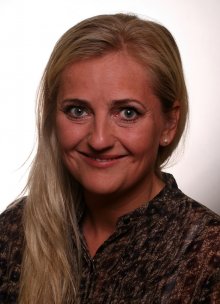
Nanna Margrét Gunnlaugsdóttir
Miðflokkurinn
Born 1978-04-09
Stúdentspróf VÍ 1998. Viðskiptafræðingur MBA frá HR 2016.
|
260 speeches this session |
48,839 words total |
187 words avg per speech |
Speeches: Speech count (percentile). Attendance: Vote participation rate. Loyalty: Votes aligned with party majority. Breadth: Issue diversity (percentile). Experience: Sessions served (percentile).
Spotlight: Nanna Margrét Gunnlaugsdóttir
The Icelandic parliament produces two kinds of opposition MP. The first is the ideological pugilist — the one who opposes because opposing is the point, whose speeches are performances of conviction rather than interrogations of evidence. The second kind is rarer, and in its way more uncomfortable for a government to face: the operator, the person who has actually run things, who reads the consultation responses and can tell the difference between a stated objective and a likely result. Nanna Margrét Gunnlaugsdóttir, Miðflokkurinn's representative for Suðvesturkjördæmi, is conspicuously the second kind. With an MBA, a decade in shipping at Eimskip, years on the boards of Isavia and Fríhöfnin, and her own career in retail and investment, she arrives at parliamentary debate not with an ideology to vindicate but with a spreadsheet to query. In a chamber where rhetorical temperature is the default currency, that is a genuinely distinctive posture — and, through session 157, a consistently productive one.
This week she was the third-highest speaker in Alþingi by word count, delivering 15 speeches totalling 1,729 words across several debates. The most substantive was a pair of major addresses on state-owned enterprises that together ran to nearly 6,000 words — the longest sustained piece of opposition legislative analysis in the week, and, by some margin, the most structurally ambitious.
Thematic Profile
The state as a shareholder that does not check its returns
The largest set piece of the week was Thursday's debate on the government's portfolio of state-owned companies — 45 entities representing, as Nanna Margrét argued, over one trillion krónur of public capital committed to banks, airports, power utilities, and ancillary holdings. Her case, developed across two speeches, was that the Icelandic state does not routinely ask whether this capital is being deployed efficiently, and that the cost of not asking is substantial.
She was precise about what she was and was not arguing. She did not call for mass privatisation. She called for objective analysis of which holdings remain strategically justified and which have calcified into institutional inertia — and for competitive tendering of operations where specialist operators could do a better job than the state. The reference point she introduced was Cyprus, which, in her account, tendered the operation of its airports: shareholders received a dividend, specialist firms managed capital investment and day-to-day operations, the state retained ownership. Whether the Cyprus model translates cleanly to Iceland's circumstances is a legitimate question, but her point was narrower: the question can be posed without the sky falling.
She also argued that eigendastefnur — ownership policy guidelines issued by the responsible ministry — are often internally contradictory, making it structurally impossible for boards to act rationally on the government's stated intentions as owner. For someone who sat on the Isavia board from 2018 until the 2024 election, this was not abstraction. The critique had the texture of an audit rather than an attack.
The vocabulary of taxation, and its revision
Nanna Margrét's most persistent thread through the session as a whole — across 260 speeches and nearly 49,000 words — has been her challenge to the government's self-description of its fiscal decisions. Her argument, built incrementally across multiple debates, is that the coalition promised not to raise taxes on ordinary people and has since introduced, by her careful count in September 2025's fiscal amendments debate, upward of sixty separate levy increases affecting individuals and businesses alike.
The rhetorical technique she deploys is methodical to the point of being almost self-effacing. In that September speech she went through fourteen chapters of the omnibus legislation, item by item, asking after each increase which cohort was not, by the government's own definition, "the general public." The irony was dry rather than theatrical — closer to a forensic accountant than an opposition tribune.
This week the argument acquired a new chapter. In her account, the government's language in its updated fiscal plan has shifted: what were previously presented as skattahækkanir (tax increases) now appear as umbætur (reforms). Nanna Margrét quoted this terminological shift directly and said — and this was her characterisation, offered as a political diagnosis — that these deceptions would not hold, and that the nation needed genuine leadership and genuine action on the economy. The phrase she coined earlier in the session for the broader pattern — leiðindaósiður, a compound noun best rendered as "tedious bad habit" — does precise work: it implies not a single lapse but a systematic tendency, and the word leiðindi (tedium) deliberately deflates the government's conduct from dishonesty to boringness, which is in some ways the sharper register.
Parliamentary procedure as a practical complaint
A third theme, less analytically ambitious but politically significant, concerns the committee system. Nanna Margrét has returned on several occasions this session to the fate of private members' bills — the bills that backbench opposition MPs introduce, which are referred to committee after first reading, trigger public consultation processes, generate submissions from citizens and businesses who invest genuine time, and then expire without meaningful engagement from coalition committee majorities who decline to put them on the agenda.
Her objection is operational. She argued that if the committee stage is a genuine legislative process, it should produce outcomes; if it is not, the Althing should stop asking people to write submissions. She told the Speaker directly that she was not prepared to take part in what she called a leikrit — theatre — and asked for a plain answer about how such bills were supposed to be handled. The framing she chose — a new MP genuinely puzzled by the system, seeking procedural clarification rather than expressing partisan grievance — was more corrosive than outrage would have been.
Rhetorical DNA
Nanna Margrét's speeches share a recognisable architecture. She opens with a concession or acknowledgement, often directed at a specific colleague whose point she is about to complicate rather than simply rebut. Then she moves to the consultation response or comparative data she has been reading. Then she extracts the gap between the stated intention and the likely practical consequence. The structure is closer to a due-diligence memo than a political address, and it works precisely because it does not sound like one.
Her use of institutional voices is characteristic. Rather than asserting that the rental housing bill would reduce supply, she read at length from the Viðskiptaráð submission making that case, then asked why the committee had not taken it into account. The tactic positions her critique as responsible parliamentarianism — she is merely reading the record — while making the government's non-response the subject of scrutiny. She deployed the same move in debates on fiscal legislation, on tourism policy, and on state enterprise governance: here is what the analysis says; here is what the government did; which of these two is wrong?
The catchphrase data from her 260 speeches this session reveals something about the deep structure of her rhetoric. Her most frequent verbal habits — af því að (because, 67 times), ég held að (I think, 48 times), það er ekki (it is not, 45 times) — are all connective or constructive. They are the verbal infrastructure of sequential argument. She builds clause by clause rather than rhetorically. This makes her hard to interrupt with effect: there is always another clause coming, and it tends to be connected to the previous one.
Catchphrases
| Phrase | Frequency | Function |
|---|---|---|
| af því að (because) | 67× | Primary causal connective; she explains, rarely merely asserts |
| að það sé (that it be/is) | 52× | Subordinate clause marker; signals conditional or policy frames |
| ég held að (I think/believe) | 48× | Epistemic modesty — measured inference, not tentativeness |
| vegna þess að (because/for the reason that) | 47× | Secondary causal marker; longer explanatory chains |
| það er ekki (it is not) | 45× | Correction and negation; the counter-claim move |
| frú forseti, ég (Madam Speaker, I) | 35× | Address formula deployed frequently — consistent formal register |
| forseti ég þakka (Speaker, I thank) | 34× | Opening courtesy that routinely precedes a complication |
Emotional Register
The dominant quality of Nanna Margrét's parliamentary voice is its temperature: consistently low. In a chamber where political emotion is the standard operating mode, she runs almost entirely on technical register — and the effect, paradoxically, is often more uncomfortable for a government than outrage would be.
The word leiðindaósiður does significant work in this regard. It does not accuse; it dismisses. It implies the pattern is no longer even surprising, merely a kind of institutional tedium that she has moved from indignation to careful documentation. The same quality runs through her budget debates. When she asked, some sixty items into the September fiscal amendments speech, on which member of the general public the latest charge did not fall, the question was genuinely deadpan — not performed irony but actual request for definition.
She can also be unexpectedly generous, and the generosity is strategic. In that same September debate, she opened by praising Finance Minister Daði Már Kristófersson for attending two consecutive days of debate — "það er til fyrirmyndar," that is exemplary — before taking apart his fiscal position across the following 1,600 words. It is a particular parliamentary grace: disarming precisely in order to fire more accurately.
The December 2025 tourism speech is the clearest window into her native register. Visitor booking levels for the following summer were, in her assessment, "alls ekki góðar" — not good at all. Finland was up 15% in arrivals; Norway was up 14%. Iceland was down. She did not present this as a rhetorical flourish but as a business problem: the kilometre tax and associated levies were pricing Iceland out of a market its competitors were actively winning. Isavia's own figures said so. She had sat on the Isavia board for seven years before the election. The credibility was not borrowed.
The Verdict
Two sessions in parliament, and Nanna Margrét Gunnlaugsdóttir has carved out a specific niche: the opposition MP whose critique of the government is essentially managerial. She wants the state companies assessed on commercial merit, the tourism sector taxed at rates that do not push visitors toward Finland and Norway, the committee system used for genuine legislation rather than procedural theatre, and the government held accountable when its vocabulary changes while its pressures do not.
The family political lineage is real and worth naming: her father Gunnlaugur M. Sigmundsson sat in parliament for Framsóknarflokkur; her brother Sigmundur Davíð Gunnlaugsson leads the party she represents. Parliamentary families are a recurring Icelandic pattern. But the texture of her record suggests an independence of method that resists easy summary as a dynastic continuation. She voted yes on the UN Convention on the Rights of Persons with Disabilities in November 2025 when her party majority abstained. She has staked positions on market mechanisms in housing and on commercial assessment of state ownership that sit awkwardly with Miðflokkurinn's more nationalist instincts on economic sovereignty.
Her voting loyalty to the party sits at 98.2% across 741 votes — high, but not absolute, and the ten dissents cluster around specific principled positions rather than registering as random noise. She votes with the bloc almost always; she thinks independently always. In a parliament where the inverse is distressingly common, that combination is not nothing.
Key Legislation & Votes
Legislation Advancing
Legislation Advancing
| Issue | Title | Stage | Vote |
|---|---|---|---|
| #590 | bann við hylmingu andlits | Bíður fyrri umræðu. | |
| #589 | fjölgun ferða í Loftbrú | Bíður fyrri umræðu. | |
| #582 | einföldun regluverks og aukin skilvirkni eftirlits með hollustuháttum og mengunarvörnum | In committee after 1st reading | Bill advances |
| #581 | náttúruvernd, Vatnajökulsþjóðgarður og úrskurðarnefnd umhverfis- og auðlindamála | In committee after 1st reading | Bill advances |
| #567 | skyldutrygging lífeyrisréttinda og starfsemi lífeyrissjóða | In committee after 1st reading | Bill advances |
| #587 | varfærniskröfur til verðbréfafyrirtækja | Bíður 1. umræðu. | |
| #577 | fjármálaáætlun fyrir árin 2027--2031 | Bíður fyrri umræðu. | |
| #580 | barnavernd | In committee after 1st reading | Bill advances |
| #579 | stefna og framkvæmdaáætlun um farsæld barna til ársins 2030 | In committee after first debate | Resolution advances |
| #571 | netöryggisvottun á sviði upplýsinga- og fjarskiptatækni | In committee after 1st reading | Bill advances |
| #570 | leiðarmerki og öryggi siglinga | In committee after 1st reading | Bill advances |
| #568 | Stofnun atvinnuveganna | In committee after 1st reading | Bill advances |
| #566 | landsáætlun vegna sjaldgæfra sjúkdóma fyrir árin 2026--2030 | In committee after first debate | Resolution advances |
Stage key: 1st reading • In committee • 2nd reading • 3rd reading • Enacted
Get Þingfréttir by email
Weekly parliamentary digest — straight to your inbox every Sunday.
Subscribe